

When a bedroom barely fits a nightstand, the space under the mattress often becomes the only place left for extra things. The challenge is turning that hidden area into a functional, attractive part of the room without sacrificing comfort or style. Below are seven distinct approaches that let you store clothes, books, or seasonal items while keeping the overall look calm and cohesive. Each concept includes suggestions for fabrics, lighting, and layout so you can picture how it would work in a real home.
1. Built‑in Drawers with a Soft Fabric Front

Imagine a low platform bed whose base is sliced into shallow drawers, each capped with a panel upholstered in a muted linen. The fabric softens the visual weight of the storage, letting the bed feel more like a piece of furniture than a closet. A light greige linen works well with both cool and warm wall colors, while a darker navy or olive panel adds depth in rooms that already have rich accents. Because the drawers sit flush with the frame, there’s no awkward gap for dust to collect. The design suits a room that already has a layered look—think a rug, a few cushions, and a simple nightstand—because the upholstered front adds a tactile element without crowding the floor.
If a full‑size built‑in unit feels too permanent, you can purchase a set of low wooden drawer boxes and cover the fronts with fabric yourself. The trade‑off is a bit more DIY effort, but it allows you to match any color scheme you prefer.
2. Rolling Fabric Bins Tucked Beneath the Bed

A pair of fabric storage bins on discreet wheels can slide under the mattress and be pulled out when needed. Choose a woven canvas in a soft earth tone; the material breathes, which is helpful for items like sweaters that benefit from airflow. The wheels keep the bins from dragging across the floor, protecting hardwood or laminate. This solution works especially well in a minimalist bedroom where the bed is the dominant piece and you want storage that can disappear as quickly as it appears.
When the room receives a lot of foot traffic, a short rubber stopper on each wheel prevents the bins from rolling too far out. The only limitation is that the bins must be shallow enough to stay hidden, so they’re best for lightweight items such as linens or accessories.
3. A Low‑Profile Storage Ottoman at the Foot

Placing a padded ottoman at the foot of the bed creates a dual purpose: a place to sit while dressing and a concealed compartment that opens from the top. Opt for a velvet in a deep teal or a soft moss green; the plush texture contrasts nicely with a sleek metal bed frame. When the lid lifts, the interior offers enough room for blankets, extra pillows, or a small stack of books. Because the ottoman sits on the floor, it also adds a subtle visual anchor that balances the room’s proportions.
If space is extremely tight, a slimmer ottoman with a hinged side panel can provide a narrower opening while still delivering the same storage capacity. The main consideration is to keep the height low enough that the piece doesn’t obstruct the flow of the room.
4. Slide‑Out Shelving Built Into the Bed Frame

For a more architectural approach, a bed frame can be designed with a shallow shelf that slides out on hidden runners. The shelf can hold a row of neatly arranged books, a few decorative trays, or a compact lamp. A natural oak finish ties the shelf to the rest of the wooden furniture, while a brushed brass handle adds a quiet hint of luxury. This configuration works nicely in a bedroom that already features built‑in elements, such as a wall‑mounted desk or a wardrobe with integrated lighting.
Because the shelf protrudes only a few inches, it won’t interfere with nightstand placement. The downside is that the runners require precise installation; if you’re not comfortable with basic carpentry, hiring a handyman is advisable.
5. A Ladder‑Style Bed with Built‑In Baskets
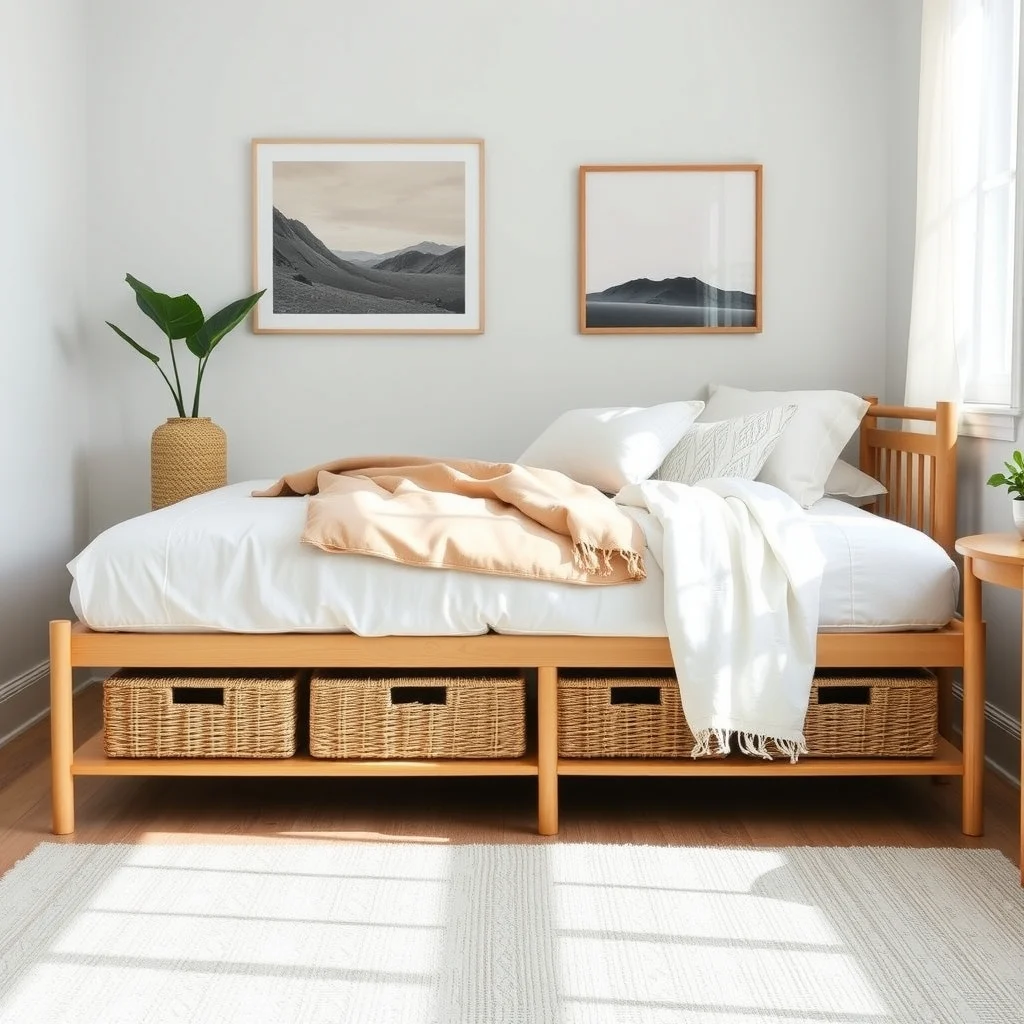
A platform bed that rises on a short ladder frame can incorporate woven baskets on each rung. The baskets, made from natural seagrass or rattan, sit just above the mattress and are perfect for storing rolled blankets, seasonal scarves, or a small collection of magazines. The ladder’s vertical lines draw the eye upward, making the ceiling feel higher—a subtle benefit in rooms with low headroom. The natural texture of the baskets adds warmth without overwhelming the space.
If you prefer a more polished look, replace the baskets with slim metal trays painted to match the bed’s finish. The only caution is to ensure the baskets are not too deep; otherwise they will become visible and disrupt the clean silhouette of the bed.
6. A Pull‑Out Closet Shelf Behind a Curtain

Hang a light, floor‑to‑ceiling curtain behind the bed and attach a narrow pull‑out shelf to the interior wall. When the curtain is drawn, the shelf slides out, revealing a row of storage boxes or a small dresser. Choosing a sheer linen curtain in a soft ivory keeps the area feeling airy while still providing privacy for the stored items. The curtain also softens the transition between the sleeping zone and the hidden closet, which is useful in rooms where the bed is placed against a wall that would otherwise feel stark.
This idea works best when the bedroom has at least a few inches of clearance between the mattress and the wall. If the space is tighter, a slimmer sliding panel can replace the curtain, though you’ll lose the softness that fabric brings.
7. A Custom‑Cut Mattress Platform with Integrated Bins

For those willing to invest in a bespoke solution, a mattress platform can be fabricated with recessed compartments that open from the side. The compartments can be lined with a quiet felt or soft foam to protect delicate items. A platform finished in a matte walnut pairs well with a light-colored duvet, creating a balanced contrast. Because the bins are part of the platform itself, there’s no additional furniture to crowd the room, and the storage is completely invisible when the mattress sits on top.
The main consideration is cost and the need for a professional carpenter or cabinetmaker. If a custom build is out of reach, a ready‑made low platform with removable panels can mimic the effect at a lower price point.
FAQ

How deep should under‑bed storage be to fit most mattresses?
A clearance of at least 6‑8 inches is typically enough for shallow drawers or bins. Thicker mattresses may require a deeper gap, so measure the space before purchasing storage solutions.
Can I use plastic containers under the bed without damaging the floor?
Yes, but place felt pads or a thin rug underneath to prevent scratches. Plastic containers are easy to clean, but they can trap moisture, so choose breathable fabrics for items that need airflow.
Is it safe to store heavy items under a low platform bed?
Heavy items should be kept on the lower portion of the platform to avoid stressing the frame. Distribute weight evenly and avoid stacking more than a few pounds per compartment.
What lighting works well with under‑bed storage?
A low‑profile LED strip along the underside of the headboard provides gentle illumination without glare. This helps you see the contents of drawers or bins without turning on a bright overhead light.
How do I keep the area under the bed dust‑free?
Regularly vacuum or sweep the floor, and consider a thin dust‑cover that slides over the storage when not in use. Fabric covers can be removed and laundered for easy maintenance.
Final Thoughts

Under‑bed storage doesn’t have to be an afterthought; it can become a defining feature of a small bedroom when approached thoughtfully. Whether you prefer the sleekness of built‑in drawers, the flexibility of rolling bins, or the elegance of a hidden shelf behind a curtain, each option offers a way to reclaim space without compromising style. By matching materials, colors, and textures to the rest of the room, you’ll create a cohesive look that feels intentional rather than improvised. Take a moment to assess the clearance you have, consider the items you need to store, and choose the solution that best aligns with your daily routine. A well‑designed under‑bed storage system can turn a cramped sleeping area into a tidy, welcoming retreat.