
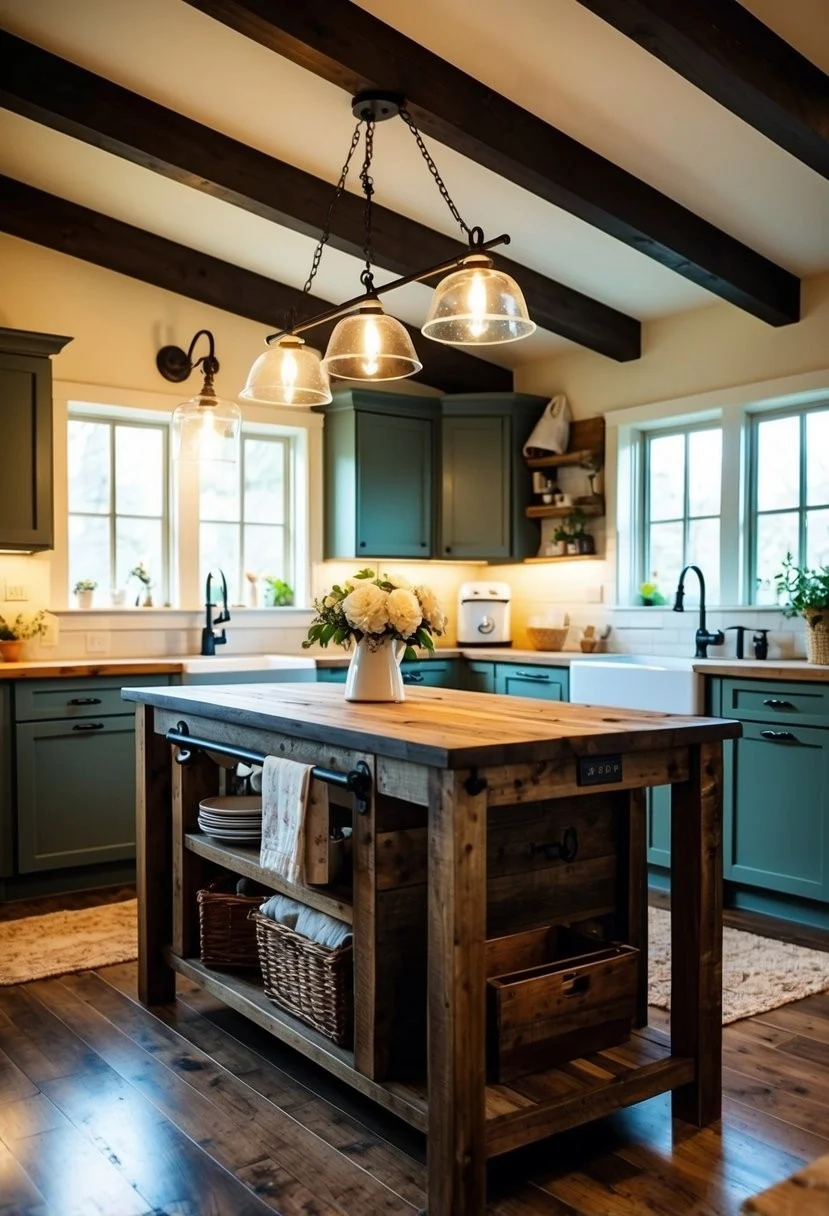
Step into a kitchen that feels like a well‑kept garden shed turned gathering place, where the scent of fresh herbs mingles with the warm glow of late‑afternoon sun. In 2026 the cottagecore aesthetic has softened its edges, inviting practical comfort without sacrificing style. Think of a space that welcomes a pot of simmering soup, a stack of handwritten recipe cards, and the quiet hum of a farmhouse radio.
These ideas focus on pieces you can touch, see, and arrange today. By pairing weathered materials with soft textiles and thoughtful lighting, you’ll create a kitchen that feels lived‑in from the first moment you open the pantry door.
1. Reclaimed Barnwood Island Counter
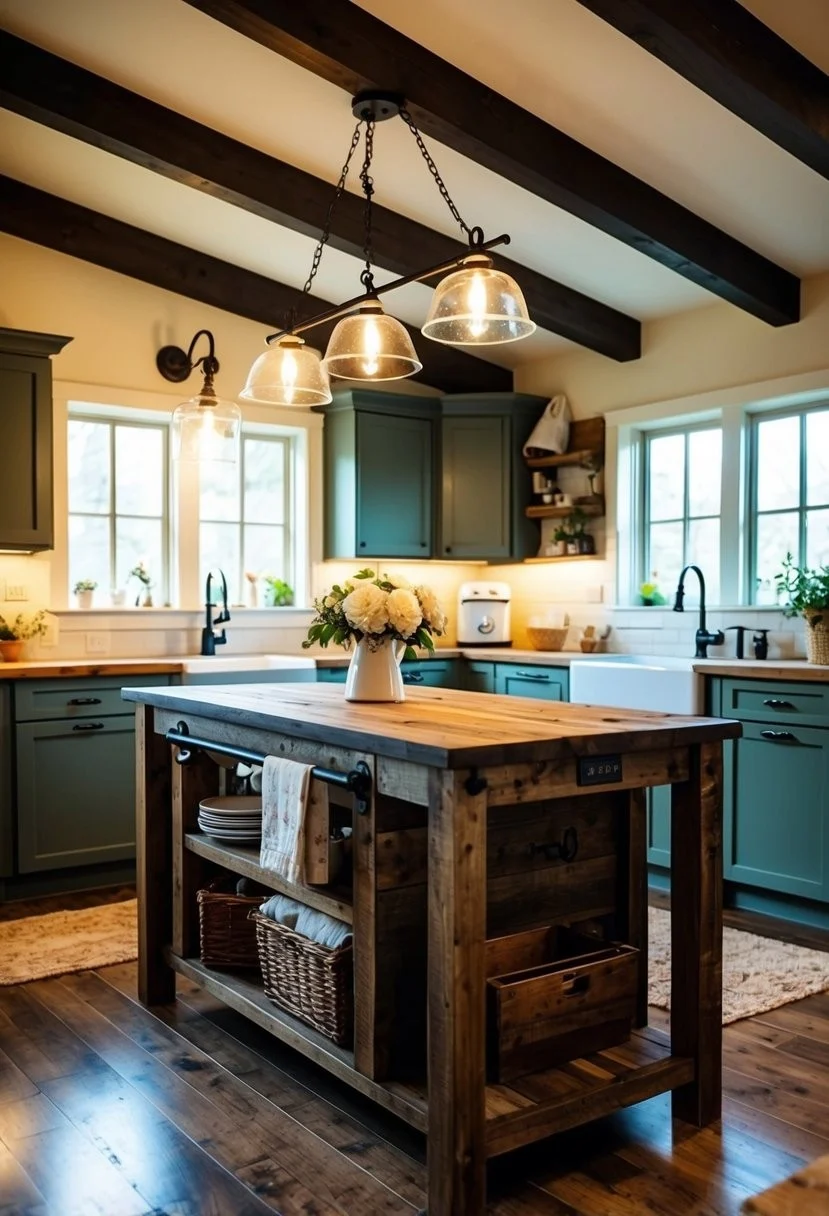
The centerpiece of a cottagecore kitchen is often a sturdy island that doubles as prep space and casual dining spot. Choose reclaimed barnwood with a matte finish; the natural knots and faded grain bring a sense of history. Pair the countertop with a pair of simple metal legs painted in muted sage, allowing the wood’s character to dominate.
Lay a runner of muted gingham in cream and soft green to protect the surface while adding a hint of pattern. Below the island, install open drawers with brass pulls—these small details echo the rural hardware found in old farmhouses. Position the island near a large window so morning light washes over the wood, highlighting its subtle variations.
2. Hand‑Painted Ceramic Sink
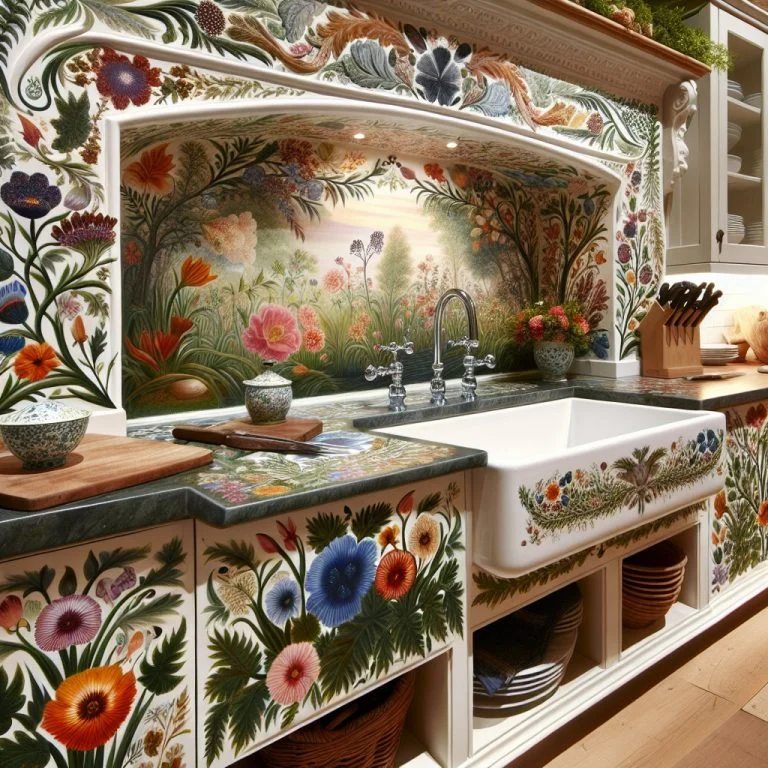
A hand‑painted ceramic sink introduces a splash of artisanal charm. Look for a basin glazed in a creamy ivory with delicate, hand‑stroked motifs of wildflowers or tiny birds in muted blues and sage greens. The smooth, cool feel of the ceramic contrasts nicely with the rougher textures elsewhere in the room.
Surround the sink with a simple beadboard panel painted a soft dove gray; this protects the walls while keeping the focus on the artwork. Add a small brass dish rack and a wooden cutting board to the countertop, reinforcing the handcrafted theme without overwhelming the visual balance.
3. Vintage Brass Pendant Cluster
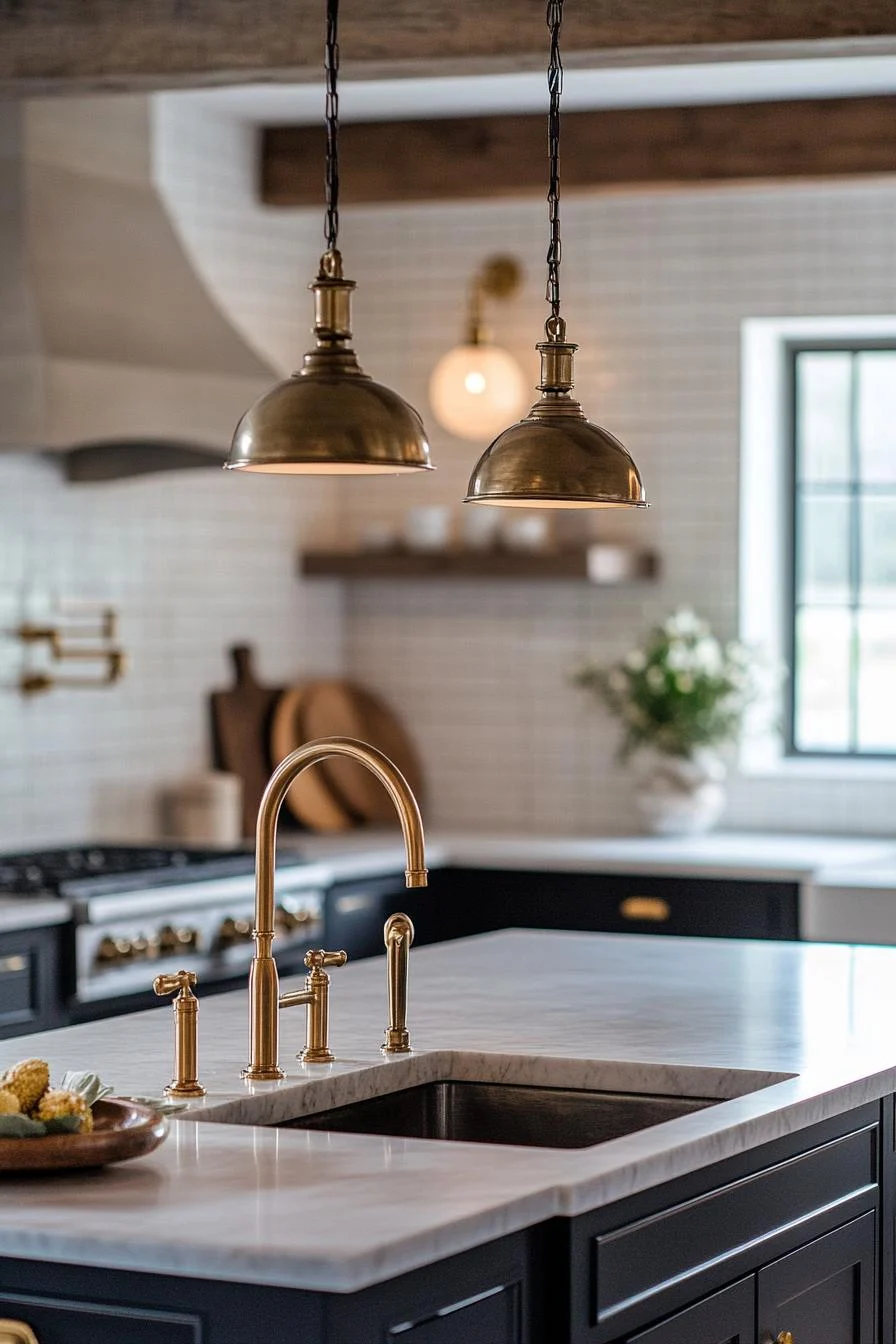
Lighting in a cottagecore kitchen should feel both functional and nostalgic. A cluster of three vintage brass pendants, each with a frosted glass shade, creates a warm pool of light over the island or dining nook. The brass patina adds an aged glow that complements reclaimed wood.
Hang the fixtures at varying heights—about 30 inches above the countertop and 24 inches over the seating area—to provide layered illumination. Pair the light with a muted amber bulb for a soft amber hue that enhances the natural tones of the surrounding materials.
4. Open‑Shelf Walnut Cupboard
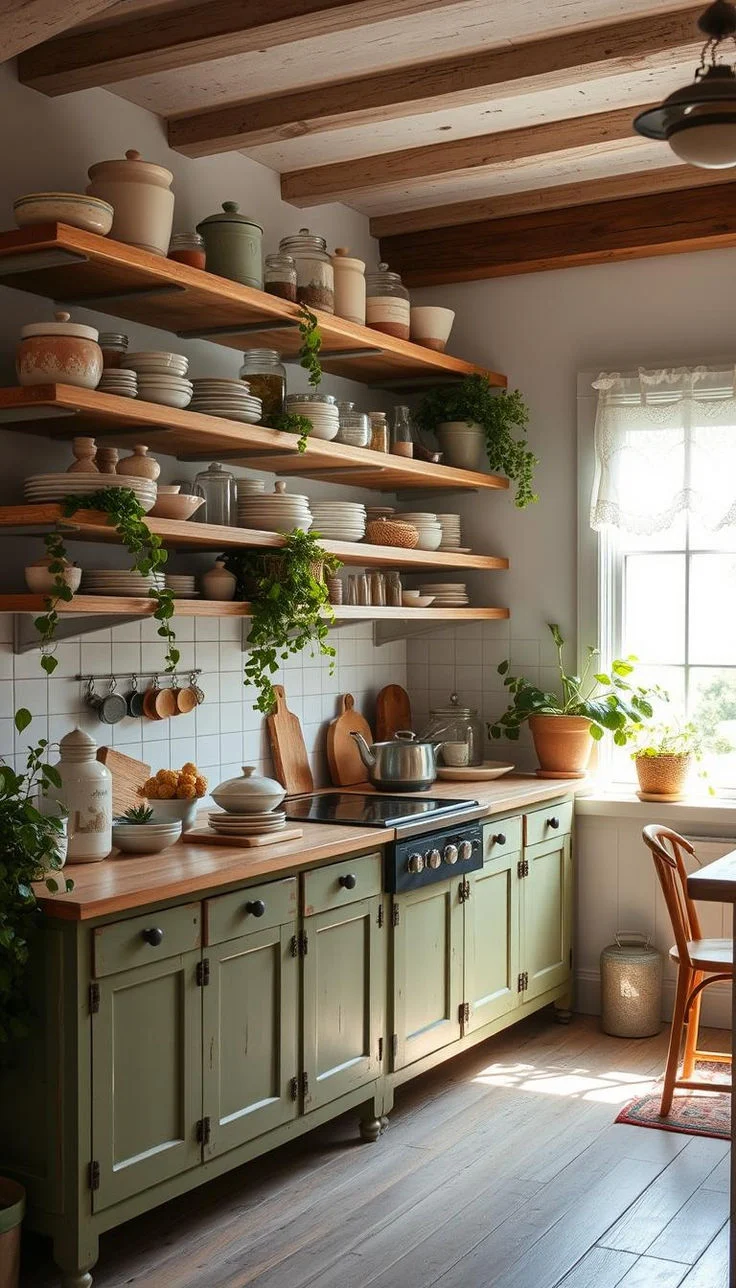
Replace a solid upper cabinet with an open‑shelf walnut unit to showcase heirloom dishes and dried herbs. The walnut’s deep, reddish‑brown grain adds richness, while the open design keeps the kitchen feeling airy. Arrange plates in staggered rows, alternating white porcelain with speckled stoneware for visual interest.
Insert small glass jars of dried lavender, rosemary, and thyme on the lower shelf; the scent will drift through the room each time the door opens. Add a few woven baskets in natural sisal to store root vegetables, balancing the polished wood with a touch of rustic texture.
5. Soft Linen Window Valances
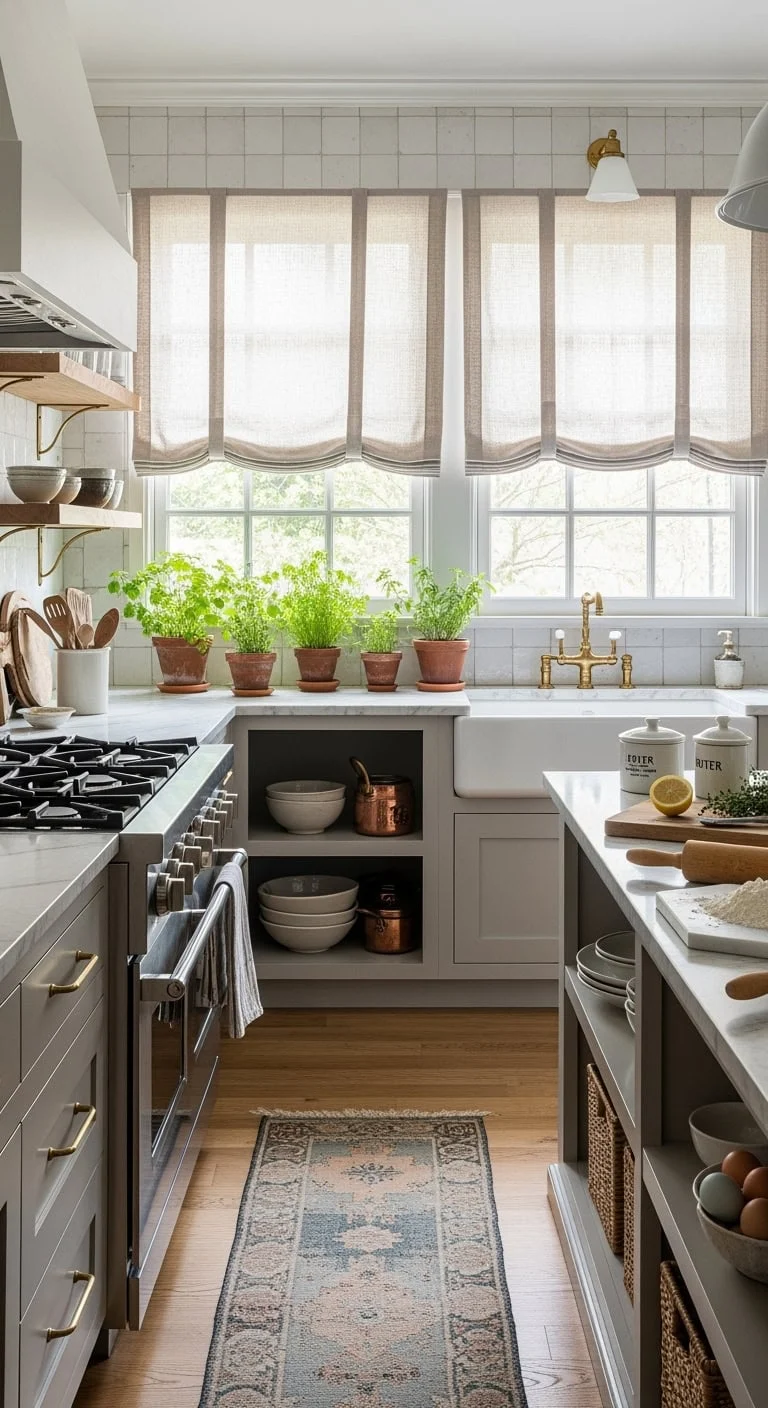
Instead of heavy curtains, drape soft linen valances across the kitchen windows. Choose a linen in a warm, buttery beige with a subtle, hand‑woven stripe in pale sage. The lightweight fabric filters light, casting a gentle glow that softens the harsher edges of metal fixtures.
Pair the valances with a simple wooden rod finished in distressed white paint. When the sun is high, the linen’s natural fibers will sway slightly, adding a quiet movement that feels alive in an otherwise static space.
6. Woven Rattan Bar Stools
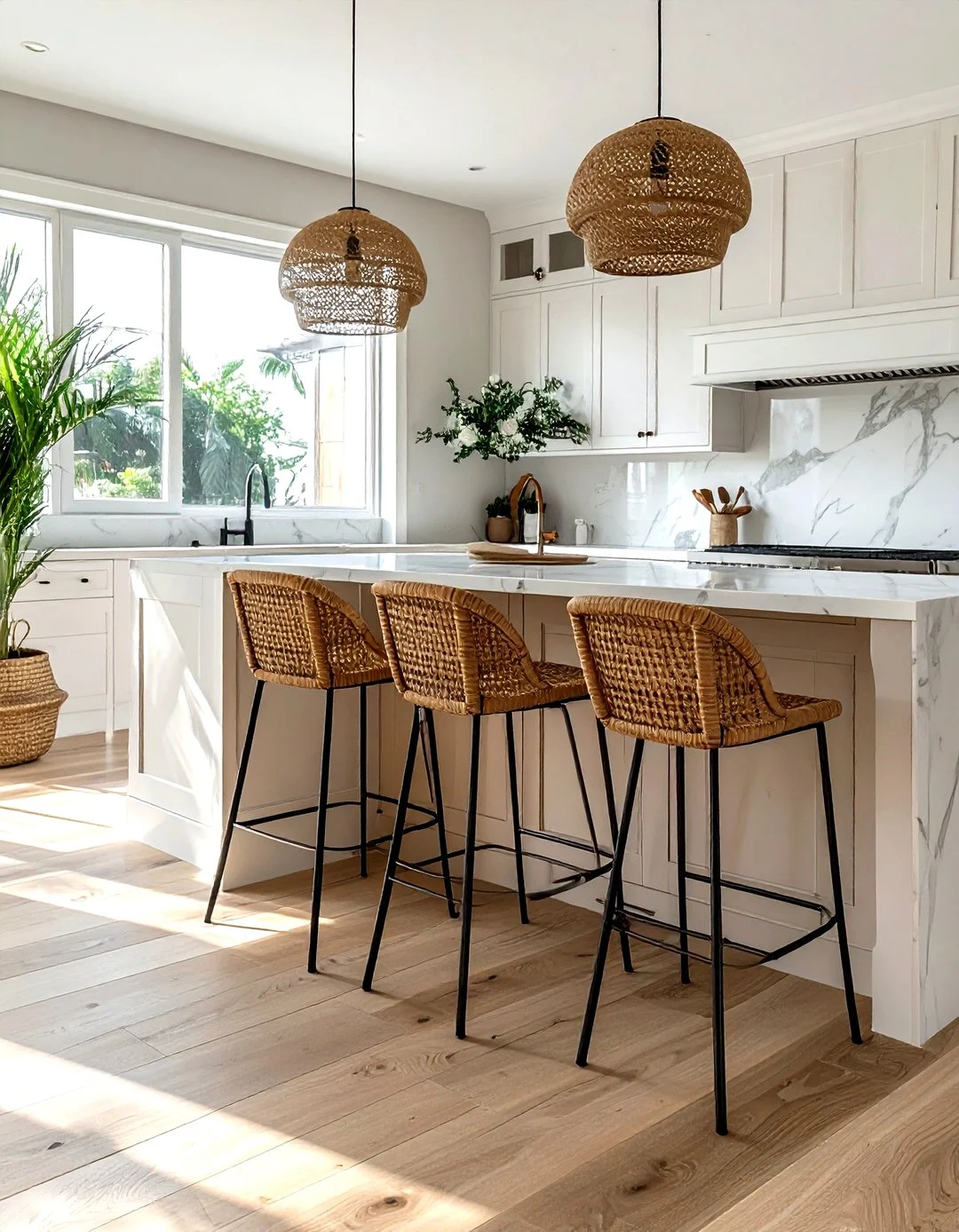
Gather around a set of woven rattan bar stools for casual meals or coffee breaks. Select stools with a low back and a seat upholstered in muted terracotta fabric, echoing the earthy palette of the kitchen. The rattan’s open weave allows light to pass through, keeping the seating area from feeling cramped.
Place a small potted herb, such as basil or mint, on the back of each stool for a pop of green. Keep a woven straw basket under one stool to hold napkins or a small stack of cookbooks, integrating storage with the overall aesthetic.
7. Slate‑Tiled Backsplash
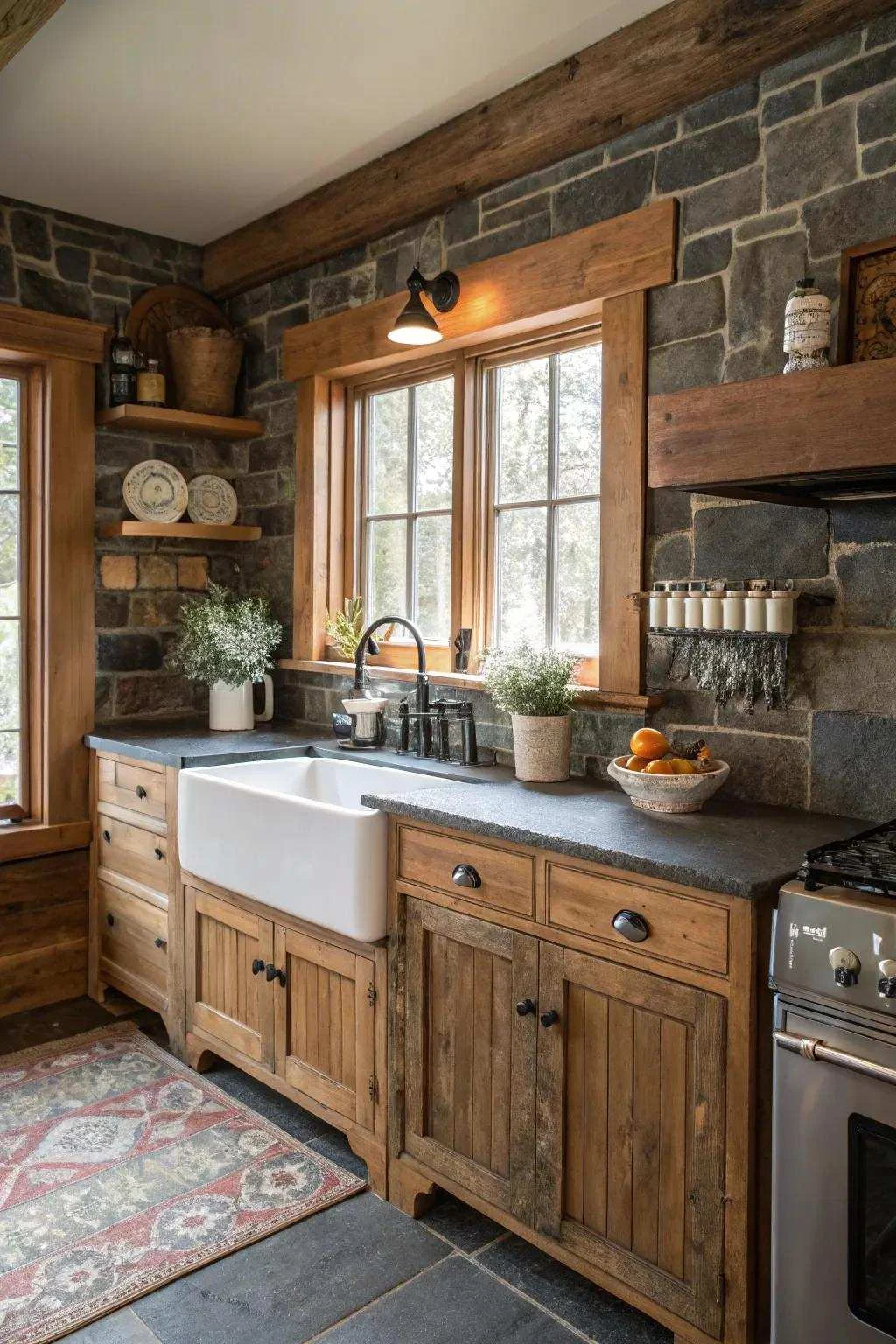
A slate‑tiled backsplash offers a rugged yet refined surface that stands up to splatter while adding depth to the walls. Choose slate tiles in varying shades of slate gray, some with subtle veining that catches the light. Lay the tiles in a staggered brick pattern to break up monotony.
Seal the slate with a matte, food‑safe finish to maintain its natural texture. Complement the cool tones with warm copper cookware displayed on the open shelf, creating a dialogue between the cool stone and the glowing metal.
With these pieces in place, your kitchen will feel like a well‑loved cottage garden—inviting, functional, and full of quiet charm. Let the textures, colors, and small details guide you as you shape a space that welcomes both daily meals and special gatherings.