
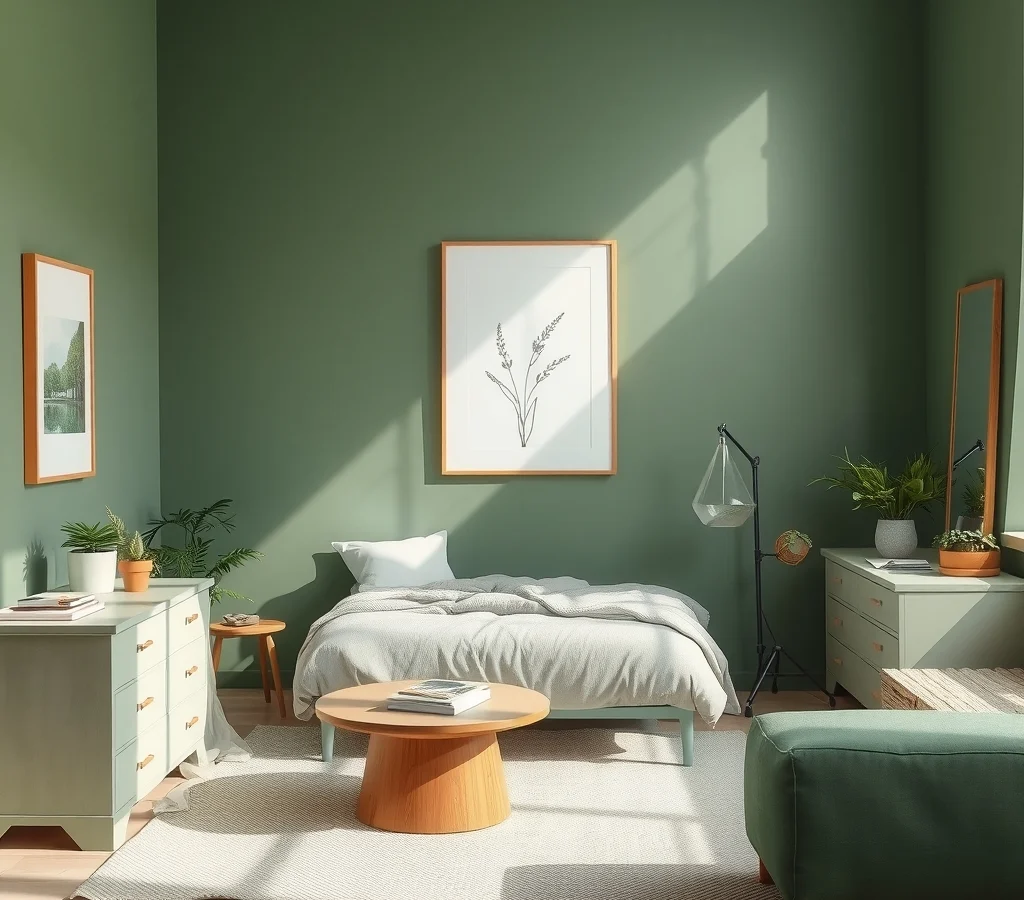
When the day’s noise fades, a bedroom should feel like a gentle sigh. Sage green, with its muted undertone of gray and a hint of yellow, offers just that kind of calm. It’s soft enough to recede into the background, yet distinct enough to give the space personality. Below are seven distinct ways to weave sage into a bedroom, each with its own mood and practical considerations. Whether you’re starting from a blank canvas or looking to refresh an existing room, you’ll find a concept that matches your style and the way you use the space.
1. Soft‑washed Sage Walls Paired with Crisp White Trim
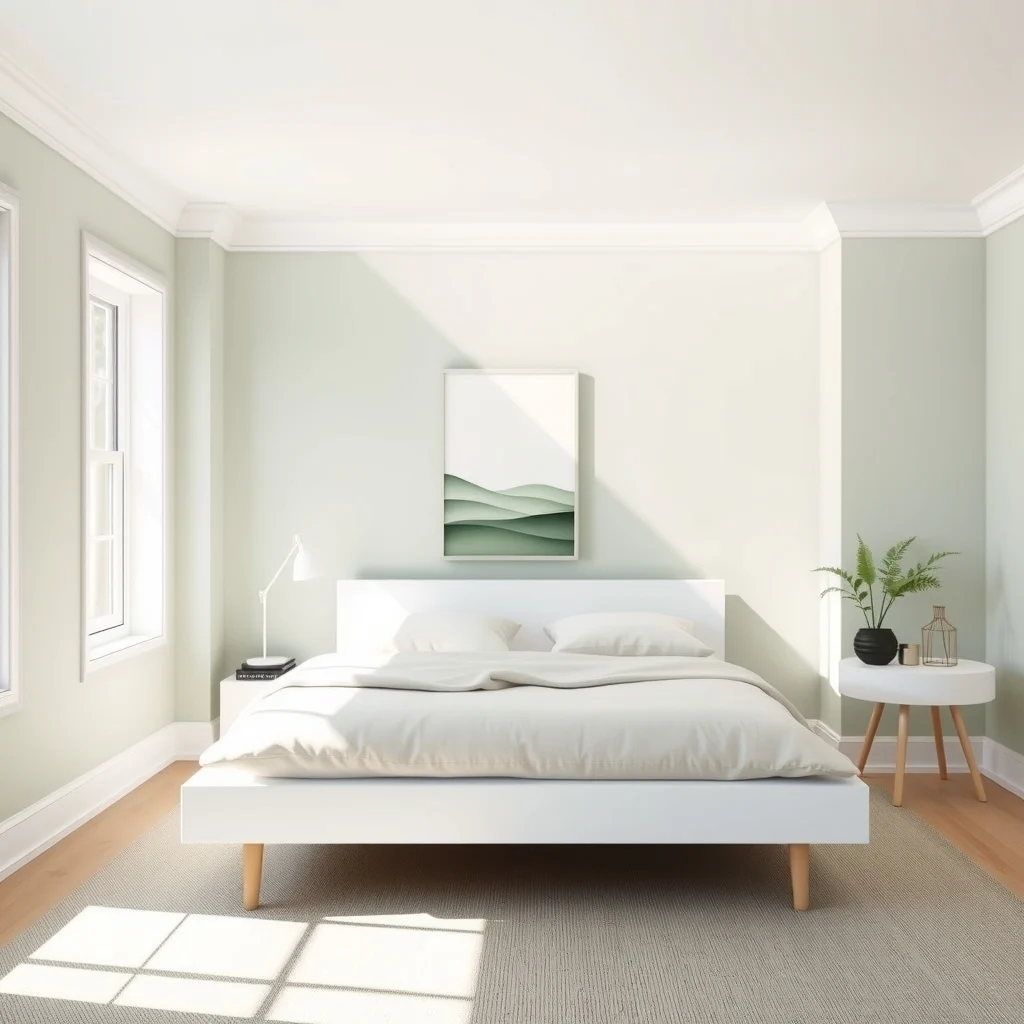
Painting the main walls in a pale sage creates a subtle wash of color that catches the light without overwhelming the room. Pairing that hue with white baseboard and window trim sharpens the contrast, letting the green breathe while keeping the overall look airy. A low‑profile platform bed in natural oak fits naturally under the muted backdrop, its clean lines echoing the simplicity of the wall treatment. To soften the visual weight, drape a linen duvet in an off‑white shade and add a few woven baskets for storage at the foot of the bed. The combination works especially well in rooms that receive plenty of natural light, because the sun accentuates the green’s undertones. If your bedroom is darker, consider a slightly richer sage and a warm‑toned wood floor to prevent the space from feeling flat.
2. Layered Textiles in Muted Earth Tones

When the walls stay neutral, the room can gain depth through textiles. Start with a sage‑green duvet cover made from brushed cotton; its slightly textured surface invites a hand‑feel that feels soothing after a long day. Add a throw pillow in a dusty terracotta and another in soft dove‑gray, allowing the green to act as a bridge between the warmer and cooler accents. A woven rug in natural jute, placed under the nightstands, grounds the composition and introduces a subtle, earthy contrast. This layering approach is ideal for a bedroom that already contains a mix of wood furniture and metal accents, as the textiles pull the disparate elements together. If you’re short on space, limit the number of pillows and focus on a single, high‑quality throw to keep the look uncluttered.
3. Sage‑Tinted Accent Wall Behind the Headboard
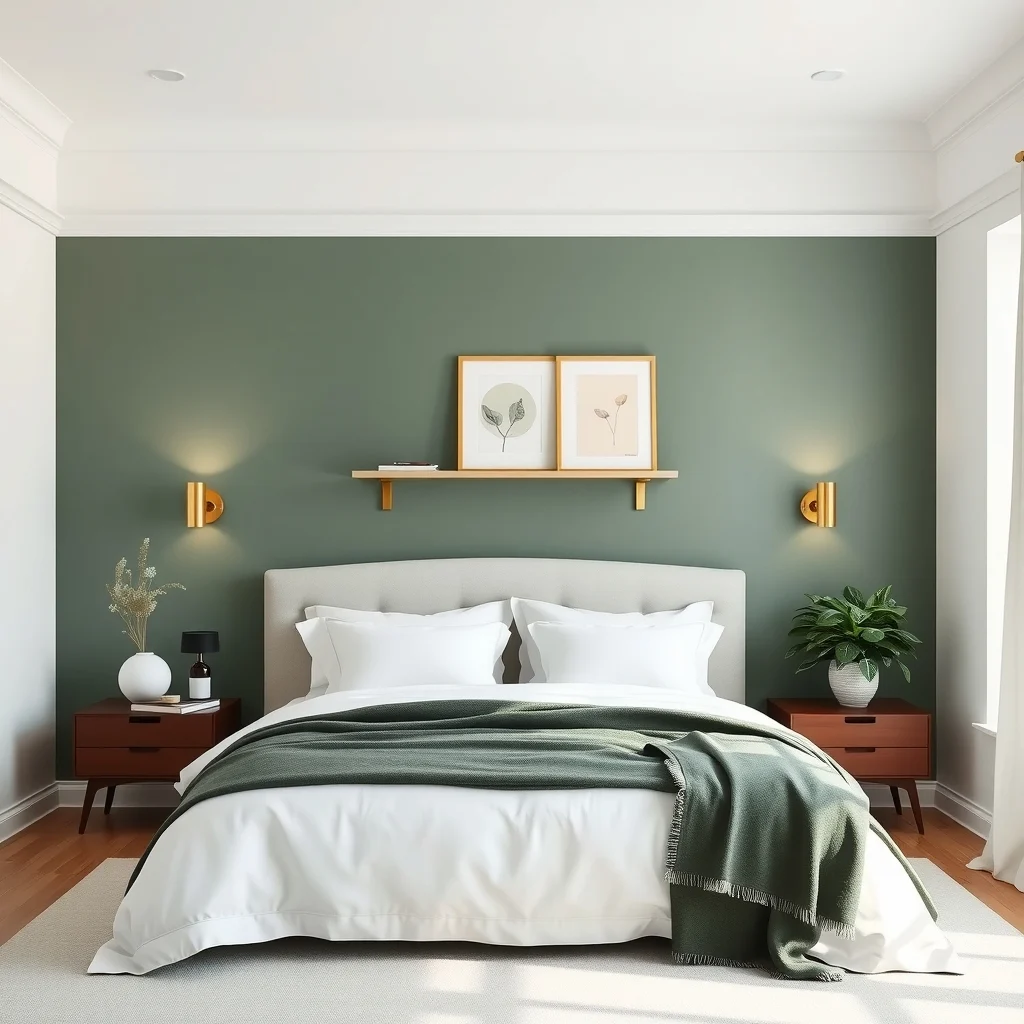
Instead of painting all four walls, a single accent wall can become the room’s focal point. Choose the wall behind the headboard and apply a deeper sage shade, perhaps a hue with a touch of olive. The darker color adds visual weight without shrinking the room, because the surrounding walls remain light. A headboard upholstered in a soft, neutral linen lets the accent wall stand out without competing for attention. Complement the wall with a pair of brass table lamps on the nightstands; the warm metal catches the green’s undertones and adds a hint of glamour. This setup works best in master bedrooms where the bed is the centerpiece, and it provides a backdrop that feels both cozy and sophisticated. For renters, a peel‑and‑stick wallpaper in sage can achieve the same effect without permanent paint.
4. Integrated Storage with Sage-Finished Cabinets
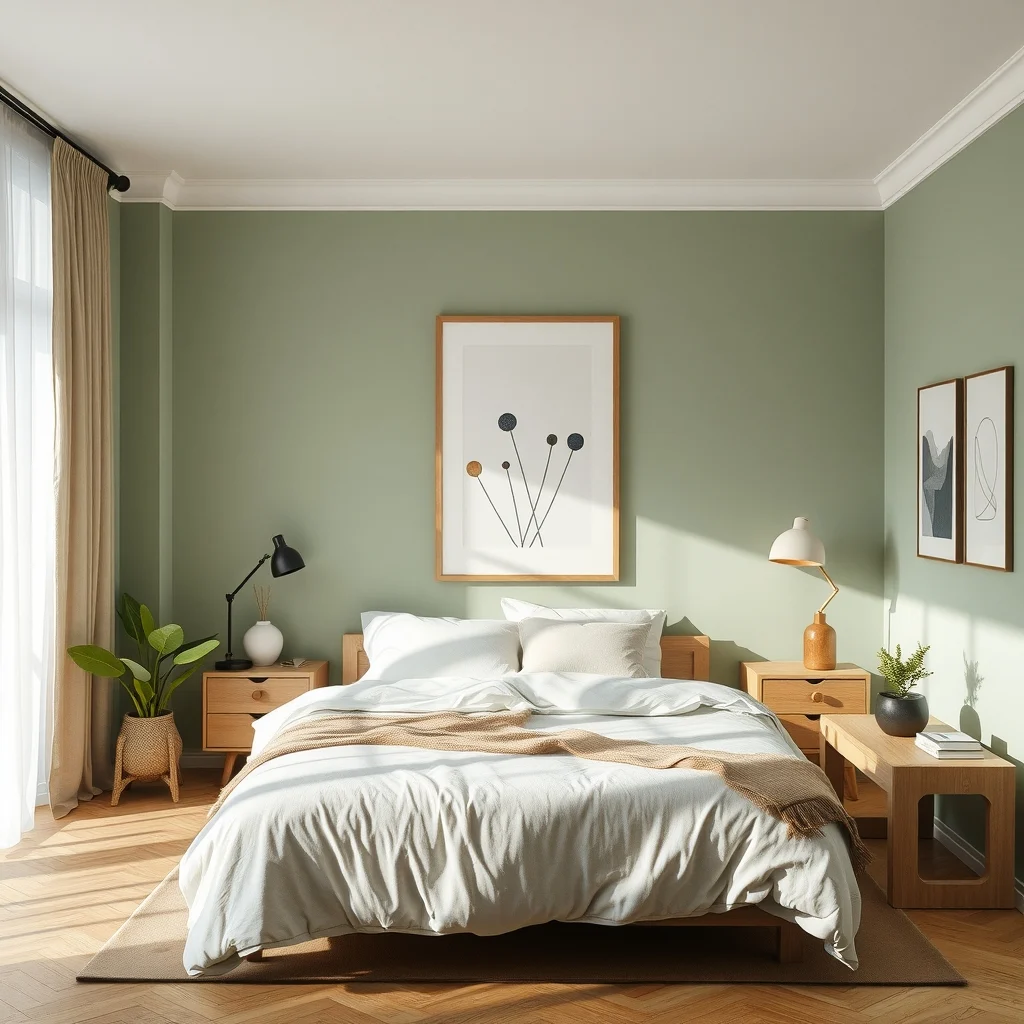
Built‑in storage can double as a design element when finished in a muted sage lacquer. Imagine a low wardrobe that stretches across one wall, its doors painted in a soft green that matches the bedding. The uniform color creates a seamless flow, while the cabinet’s sleek hardware—perhaps brushed nickel—adds a modern touch. Inside, organize clothes with woven baskets and clear trays to keep the visual weight low. This approach is particularly useful in smaller bedrooms where freestanding dressers would dominate the floor plan. If a full‑length cabinet feels too imposing, consider a pair of floating shelves painted in sage, topped with a few curated objects and a small reading lamp.
5. Natural Light Enhanced by Sheer Sage Curtains
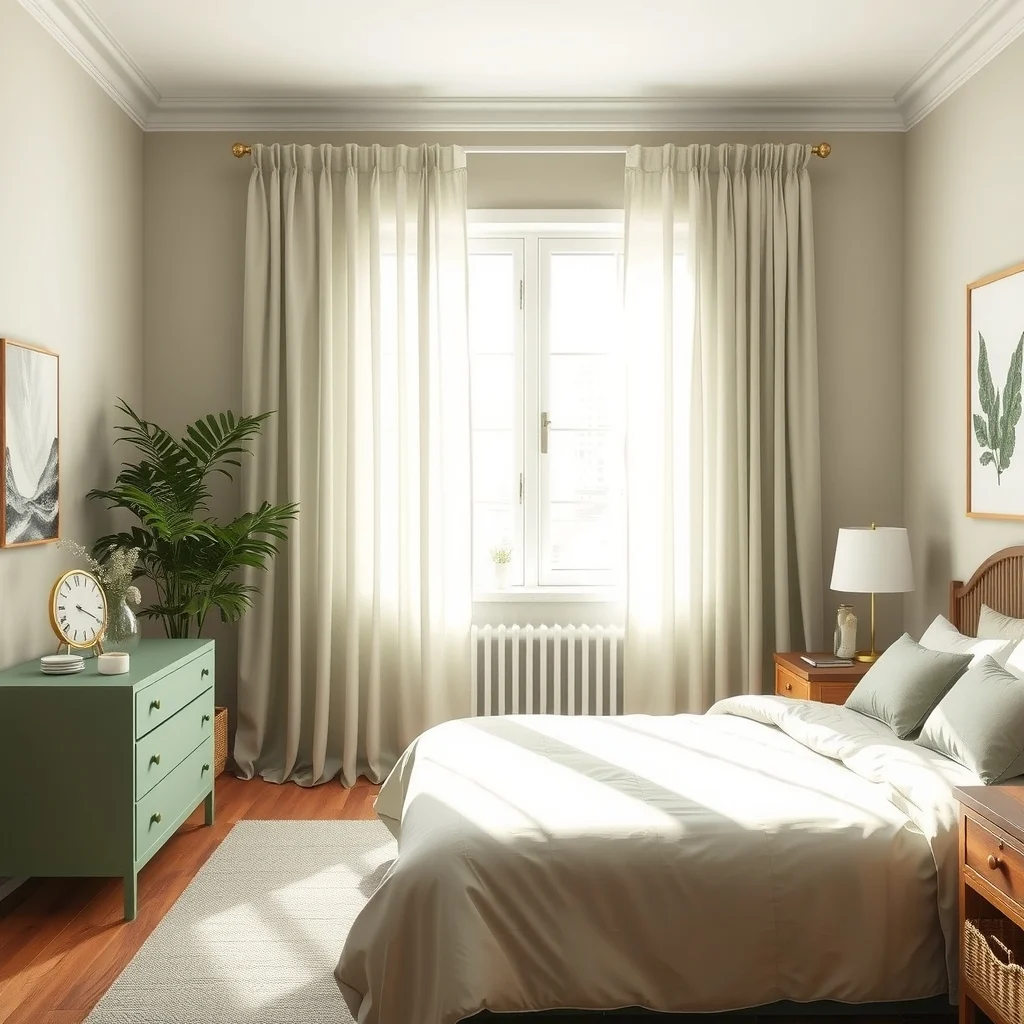
Window treatments often dictate how much daylight reaches the interior. Sheer curtains in a light sage hue filter the sun’s rays, casting a gentle greenish glow across the floor in the morning. The fabric’s translucency preserves privacy while still allowing a view of the outdoors. Pair the curtains with a simple wooden headboard and a minimalist nightstand to keep the focus on the subtle color shift that occurs as the day progresses. If the bedroom faces a street with a lot of activity, layer the sheer panels with a heavier blackout shade in a complementary neutral, ensuring you can still enjoy the soft tint when you want a darker environment for sleep.
6. Mixed‑Material Bed Frame with Sage Accents
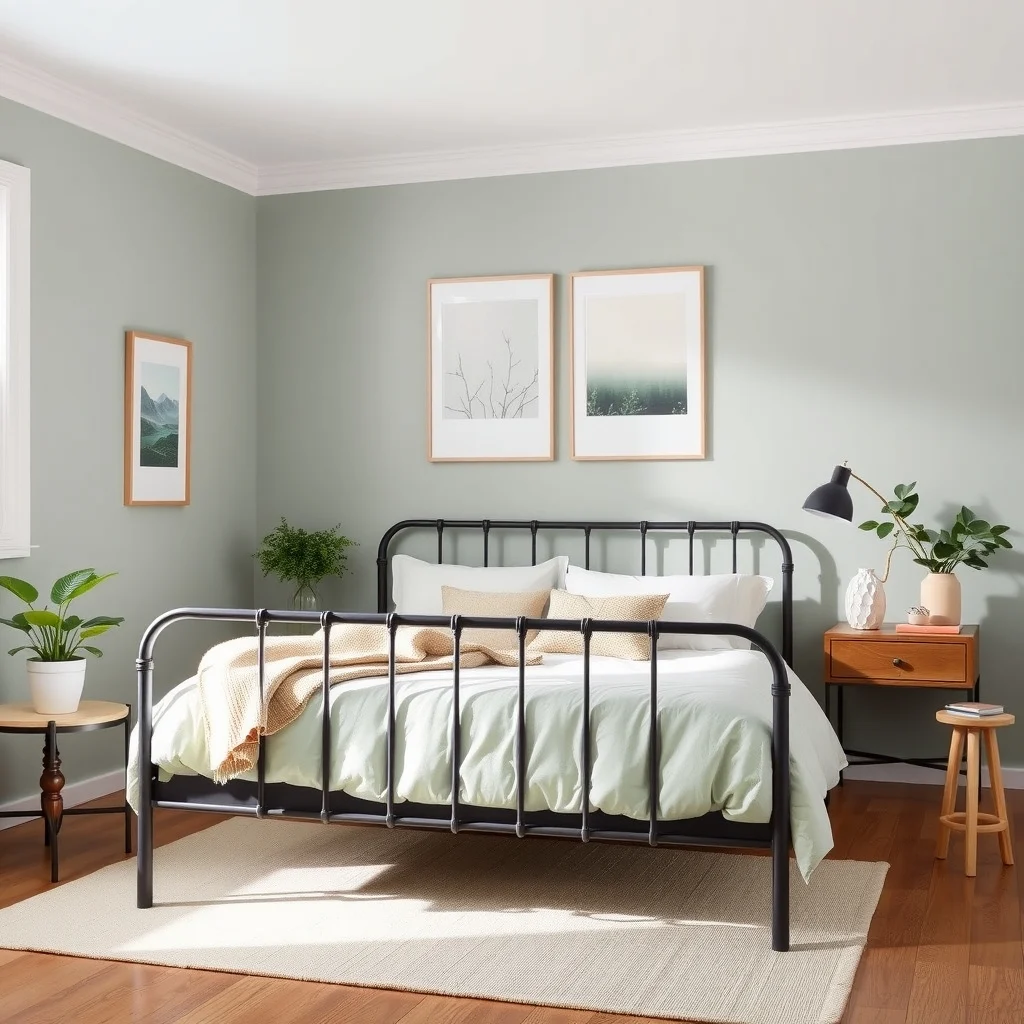
A bed frame that combines metal and wood can be softened by adding sage-colored elements. Picture a sturdy iron frame painted matte black, its side rails wrapped in a slim strip of sage‑green upholstered fabric. The upholstery not only introduces the desired hue but also cushions the metal, reducing noise when you move. Place a pair of low, wooden nightstands in a light oak finish on either side, and top each with a small potted plant—perhaps a trailing pothos—to bring a touch of nature indoors. This style suits a contemporary loft bedroom where industrial elements dominate, yet you still crave a hint of organic calm. For a more budget‑friendly version, use a plain metal frame and add a sage‑green slipcover to the headboard instead of custom upholstery.
7. Artistic Touch with Sage‑Infused Wall Art
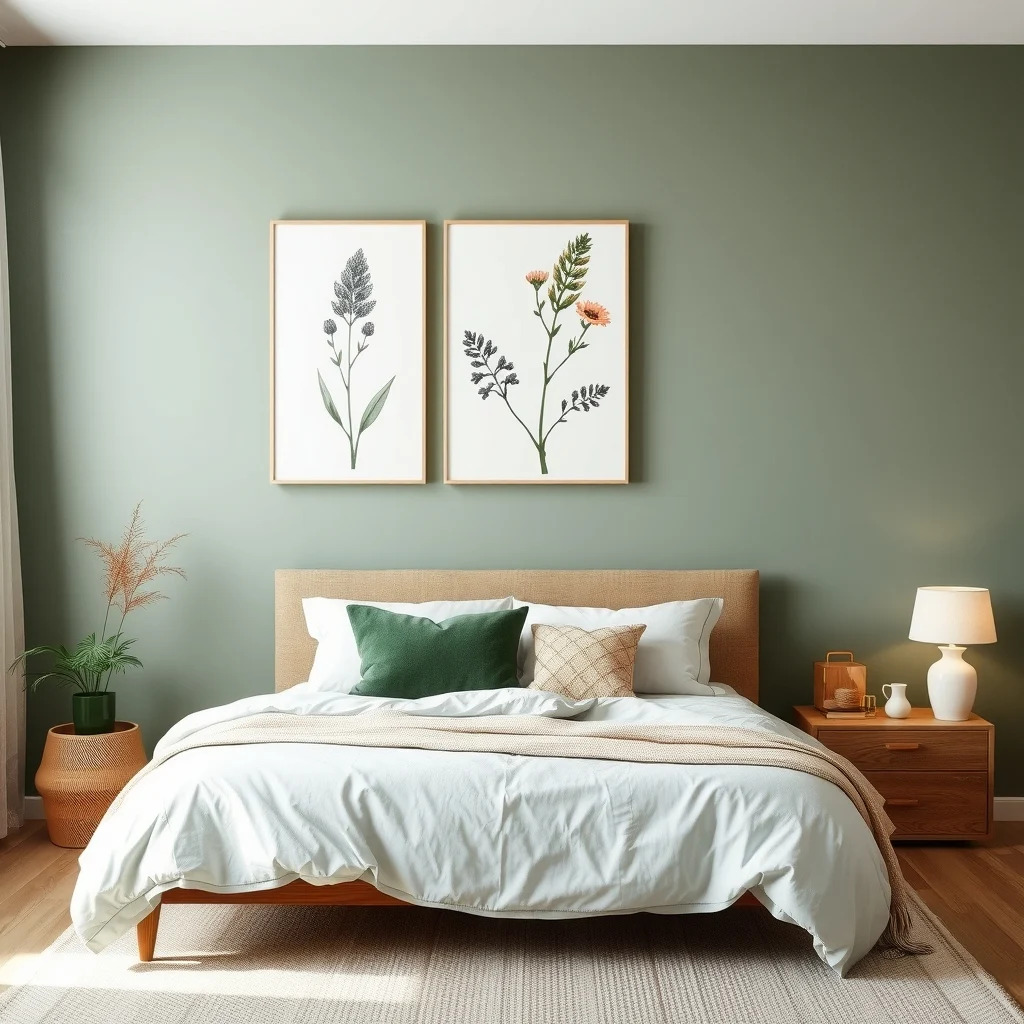
When you prefer to keep the walls neutral, art can introduce sage without committing to large swaths of paint. Choose a canvas print that features a botanical illustration where sage appears as part of the foliage, or select a modern abstract piece with subtle green brushstrokes. Hang the artwork at eye level above the bed, allowing the colors to echo any existing sage accents in the room—perhaps a pillow or a rug. The visual cue creates cohesion without overwhelming the space. For a more tactile approach, consider a woven wall hanging that incorporates sage yarn alongside natural fibers; the texture adds depth while the color ties the room together. This method works well in rooms where you like to change the look seasonally, as swapping the art is easier than repainting.
Frequently Asked Questions
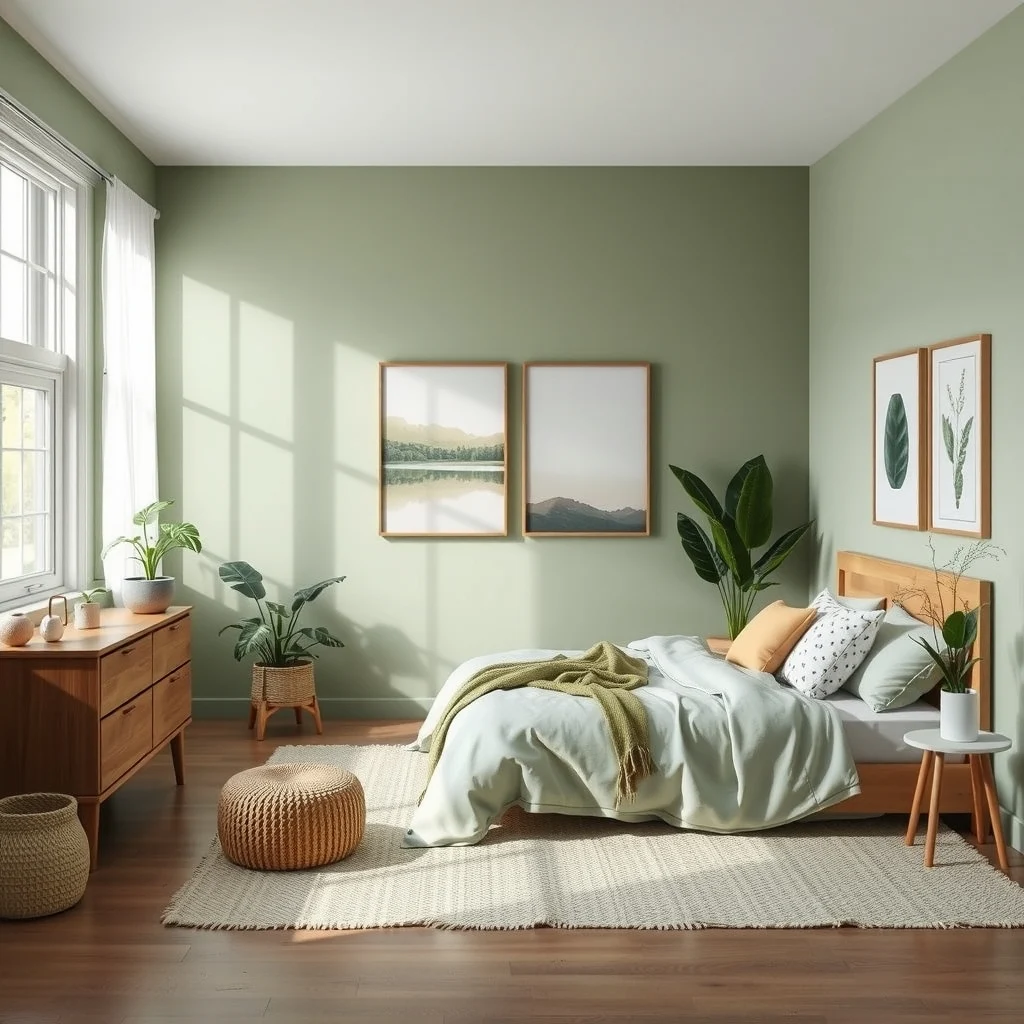
Can I use sage green in a small bedroom without making it feel cramped?
Yes, a light sage on the walls can actually open up a compact space. Keep the shade muted and pair it with plenty of white or light‑colored trim to maintain a sense of airiness.
What type of flooring works best with sage‑green walls?
Natural wood floors in a honey or light oak finish complement sage nicely, providing warmth without competing with the wall color. If you prefer carpet, a low‑pile neutral tone such as beige or greige works well.
How do I balance sage green with other colors without looking mismatched?
Use colors that sit next to or opposite sage on the color wheel—soft terracotta, warm gray, or muted gold—to create harmony. Introduce these hues through textiles, accessories, or small furniture pieces rather than large surfaces.
Is sage green a good choice for a bedroom that receives little natural light?
In low‑light rooms, opt for a slightly warmer sage with yellow undertones, which can reflect artificial light more effectively. Complement the walls with reflective surfaces like a glass bedside lamp or a polished metal mirror.
Can I achieve a sage‑green look without painting?
Yes, consider peel‑and‑stick wallpaper, upholstered headboards, or large area rugs in sage tones. These options allow you to introduce the color while keeping the walls themselves neutral.
Final Thoughts
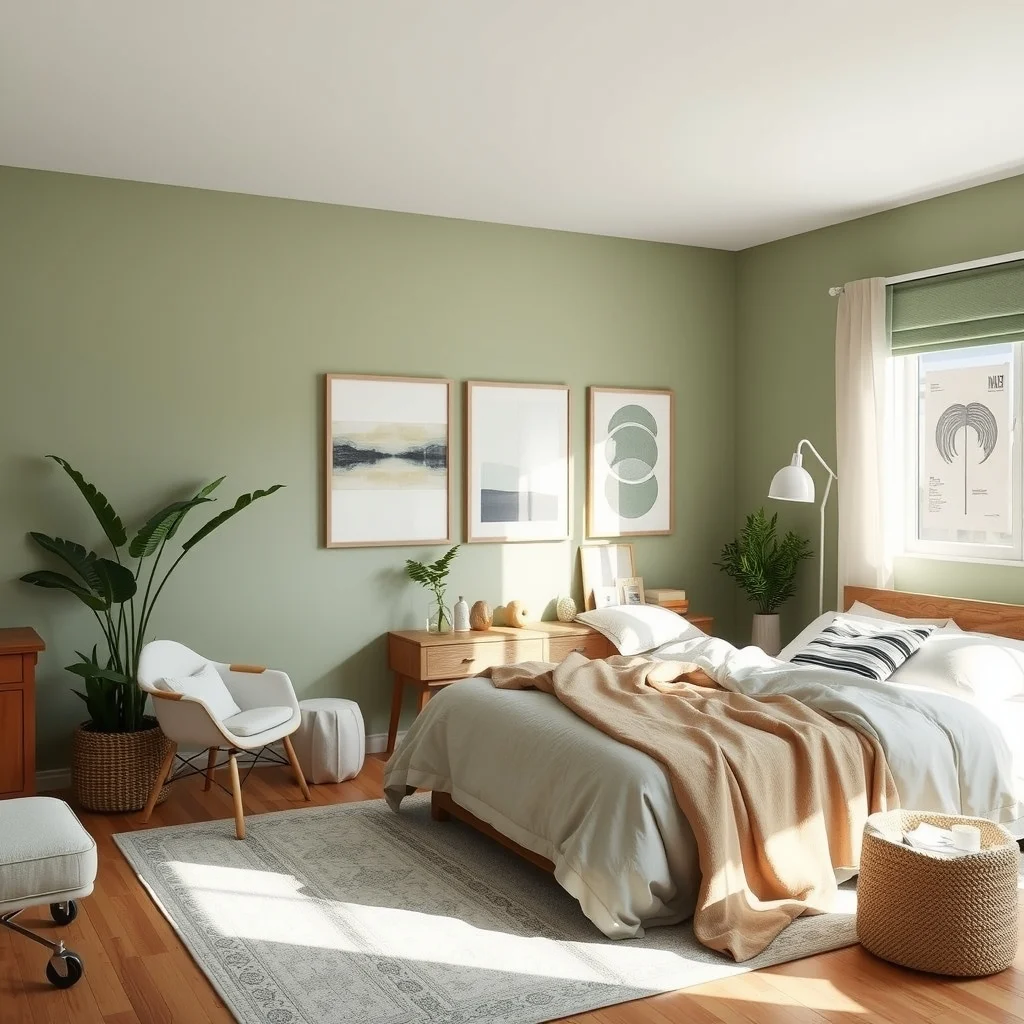
Sage green offers a quiet confidence that can transform a bedroom into a restful retreat. By choosing one of the seven approaches—whether through walls, textiles, furniture finishes, or art—you can tailor the hue to fit the size, lighting, and existing style of your space. Remember that balance is key: let the green be present, but let the surrounding neutrals and textures give the room room to breathe. With thoughtful layering and a few practical adjustments, your bedroom can become the calm oasis you return to night after night.