
A power backup system can make a home feel safer, more comfortable, and more prepared. But buying the wrong setup can become expensive fast.
Many homeowners hear words like solar panels, inverter, battery backup, portable power station, generator, hybrid system, and off-grid power, but the differences are not always clear. One system may help lower electricity bills. Another may only keep lights and Wi-Fi running during outages. Another may provide emergency backup but cost more in fuel and maintenance.
The biggest mistake is buying before understanding what your home actually needs.
Before spending money on solar panels, a generator, an inverter, or a home battery system, it helps to understand the role of each option, what it can power, what it cannot do, and which mistakes can increase the total cost.
This guide breaks it down in simple terms.
1. What Solar Panels Actually Do
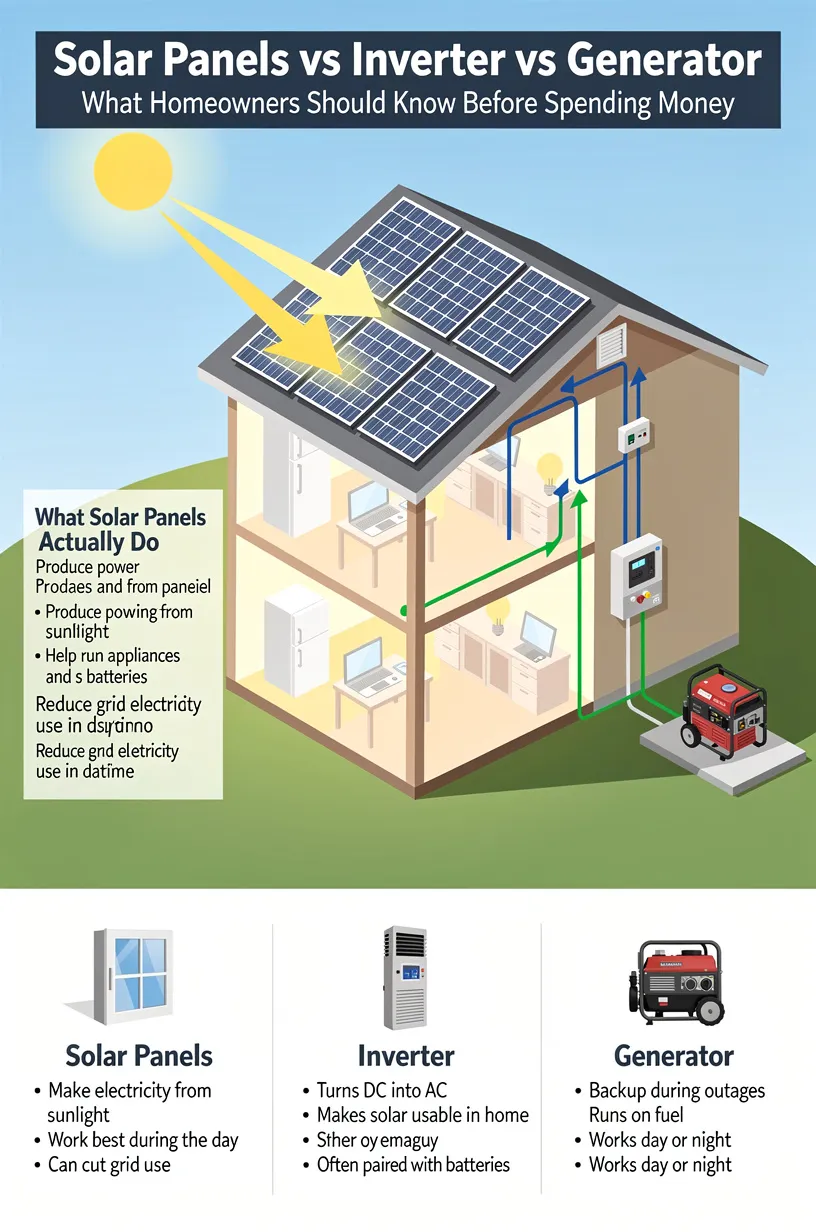
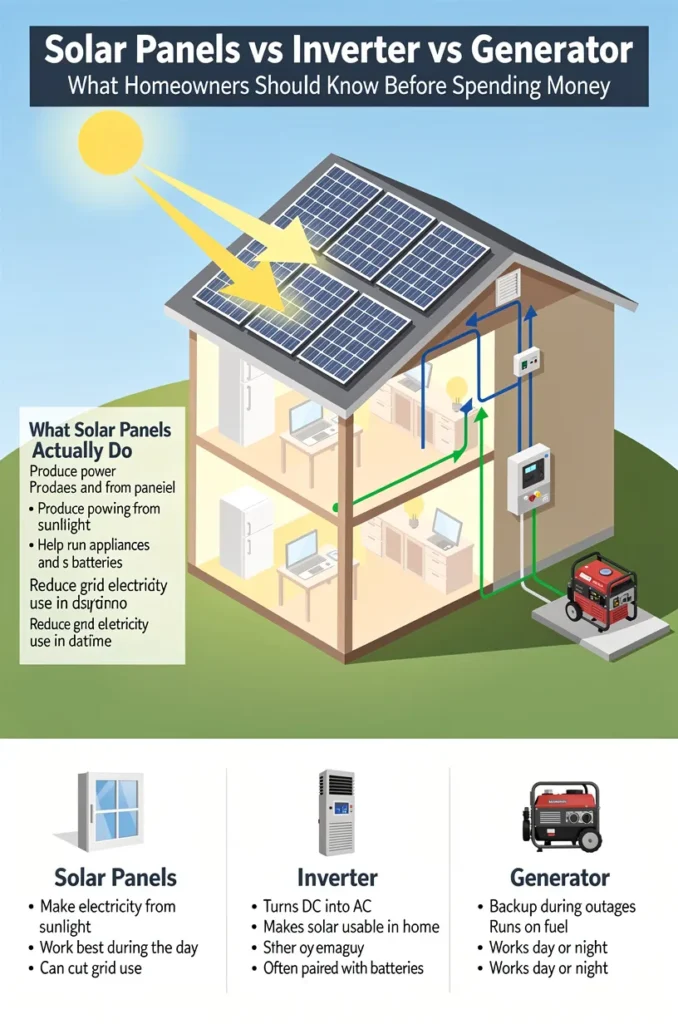
Solar panels produce electricity from sunlight. They are usually installed on a roof, carport, ground frame, or other sunny area. During daylight hours, the panels generate power that can help run appliances, charge batteries, or reduce the amount of electricity used from the grid.
But solar panels alone do not always solve every power problem.
A basic solar panel system may produce electricity during the day, but if it has no battery storage, it may not power your home at night or during an outage. This is why many homeowners pair solar panels with an inverter and batteries.
Solar Panels Are Best For
Solar panels are useful if your goal is to reduce daytime electricity use, build a longer-term energy system, or rely less on grid power over time.
They are especially helpful for homes with good sunlight, clear roof space, and regular daytime energy use.
Solar Panels May Not Be Enough If
Solar panels may not be enough if you mostly need backup power at night, during cloudy weather, or during outages. In that case, you may also need an inverter, battery storage, or another backup solution.
2. What an Inverter Does
An inverter is the part of the system that converts electricity into a form your home can use.
Solar panels produce direct current electricity. Most homes use alternating current electricity. The inverter helps convert and manage that power.
Some inverters are basic. Others are hybrid inverters that can work with both solar panels and batteries. A hybrid inverter can often manage power from solar panels, battery storage, and the grid.
Inverters Are Best For
An inverter is useful when you want backup power for selected appliances, lights, Wi-Fi, computers, televisions, security systems, or essential circuits.
It is often the center of a home backup setup.
Inverter Mistake to Avoid
Do not buy an inverter only based on price. Check what it can actually power, how much battery capacity you need, whether it supports solar input, and whether it is suitable for your home’s wiring and safety requirements.
A cheap inverter that cannot handle your needs can become an expensive mistake.
3. What a Battery Backup System Does
A battery stores electricity so you can use it later. If you have solar panels, a battery can store extra solar power for evening use. If you have grid power, some systems can charge batteries when electricity is available and use that stored power later.
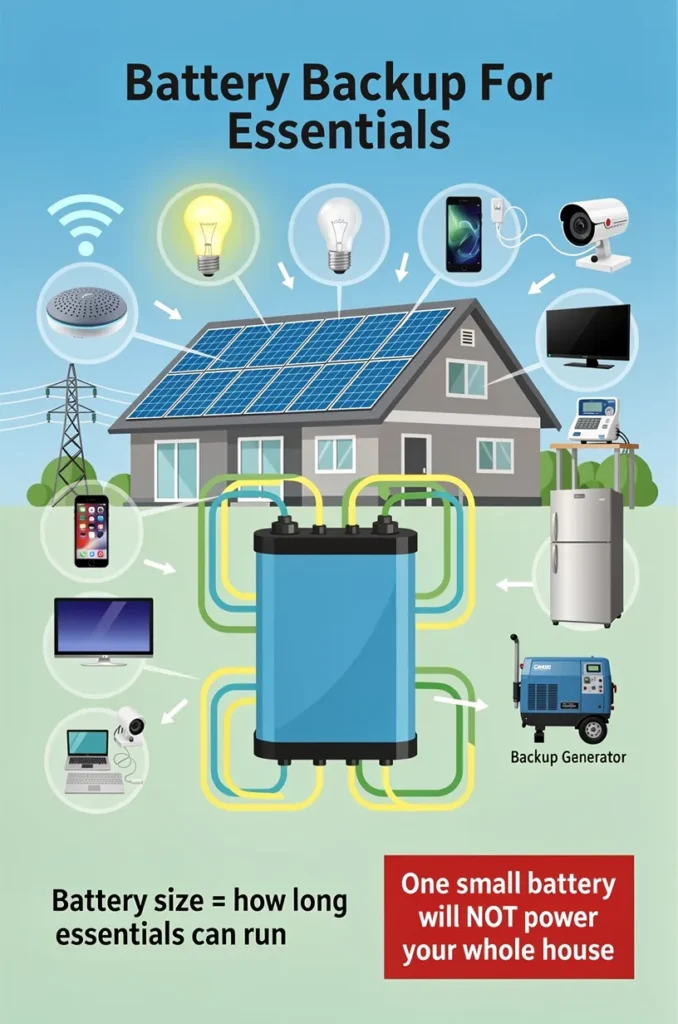
Battery storage is one of the most important parts of a backup system because it decides how long your essential appliances can run.
Battery Backup Is Best For
Battery backup is useful for powering essentials such as:
- Wi-Fi router
- LED lights
- Phone chargers
- Laptop
- Security system
- Small television
- Some fridges, depending on system size
- Medical or work-from-home essentials, if properly planned
Battery Mistake to Avoid
Do not assume one battery can power the whole house. Battery capacity matters. The more appliances you want to run, and the longer you want to run them, the more storage you need.
A battery system should be sized around real needs, not guesses.
4. What a Generator Does
A generator produces electricity using fuel such as petrol, diesel, or gas, depending on the model. It can provide backup power when there is no grid electricity and no battery power available.
Generators can be useful, but they also come with noise, fuel costs, maintenance, fumes, and safety concerns.
Generators Are Best For
A generator may be useful when you need temporary backup power, have long outages, or need to run heavier loads that a small battery setup cannot handle.
Generators can also be helpful for workshops, rural homes, farms, or situations where backup power is needed but a full solar system is not practical.
Generator Mistake to Avoid
Never use a generator indoors or in an enclosed space. Generators can produce dangerous fumes. They also need proper ventilation, fuel storage, and safe connection methods.
A generator should be chosen and used carefully.
5. Solar Panels vs Inverter vs Generator: The Simple Difference
Here is the easiest way to understand the difference.
Solar panels make electricity from sunlight.
An inverter converts and manages electricity so your home can use it.
A battery stores electricity for later.
A generator makes electricity from fuel when needed.
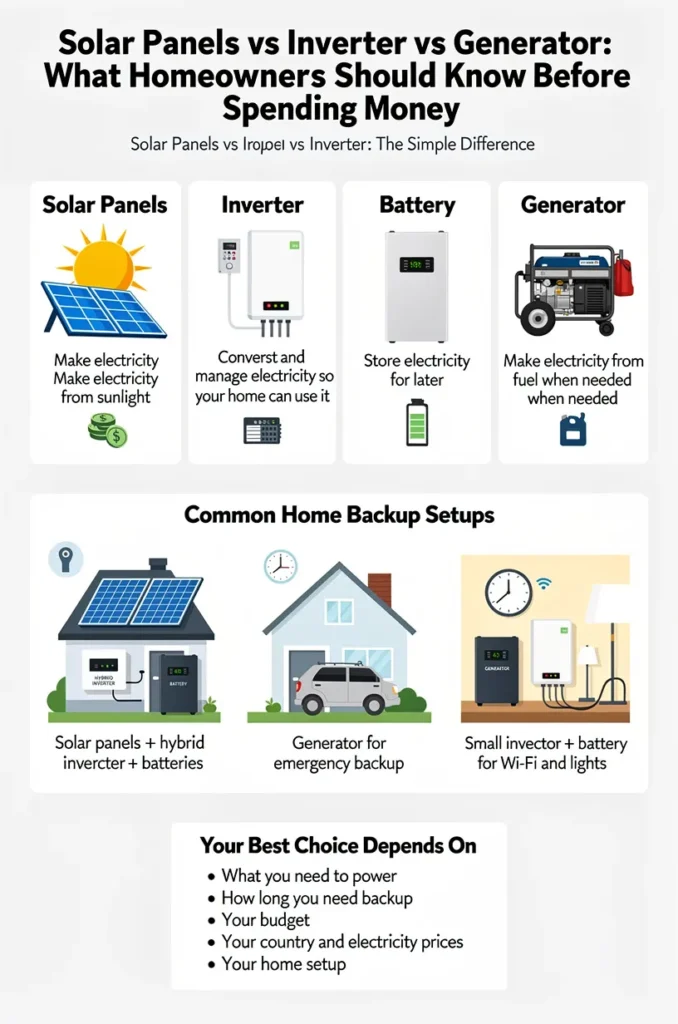
Most strong home backup systems use more than one of these. For example, a homeowner might use solar panels, a hybrid inverter, and batteries together. Another home might use a generator only for emergency backup. Another might use a small inverter and battery just for Wi-Fi and lights.
The best choice depends on what you need to power, how long you need backup, your budget, your country, your electricity prices, and your home setup.
6. Start With Your Essential Loads
Before buying any system, list what you truly need during an outage.
Many people make the mistake of trying to power the entire house. That can make the system much more expensive.
Start with essentials:
- Wi-Fi
- LED lights
- Phone charging
- Laptop
- Security system
- Fridge
- Garage motor
- Gate motor
- Television
- Medical devices, if needed
Then separate “nice to have” items:
- Washing machine
- Tumble dryer
- Oven
- Kettle
- Air conditioner
- Heater
- Pool pump
- Dishwasher
- Geyser or water heater
Heavy appliances usually need much larger systems. If your budget is limited, focus on essentials first.
7. The Geyser or Water Heater Problem
Water heating is one of the biggest energy users in many homes. Trying to power a geyser or electric water heater from a small backup system can drain batteries quickly.
This is why many homeowners manage water heating separately.
Instead of trying to power the geyser during outages, consider:
- Geyser timer
- Geyser blanket
- Pipe insulation
- Solar water heater
- Heat pump water heater
- Lower hot water waste
- Better hot water scheduling
If you reduce water-heating demand, your backup system may be easier and cheaper to size.
8. The Fridge Question
Many homeowners want the fridge to stay on during outages. That makes sense because food can spoil.
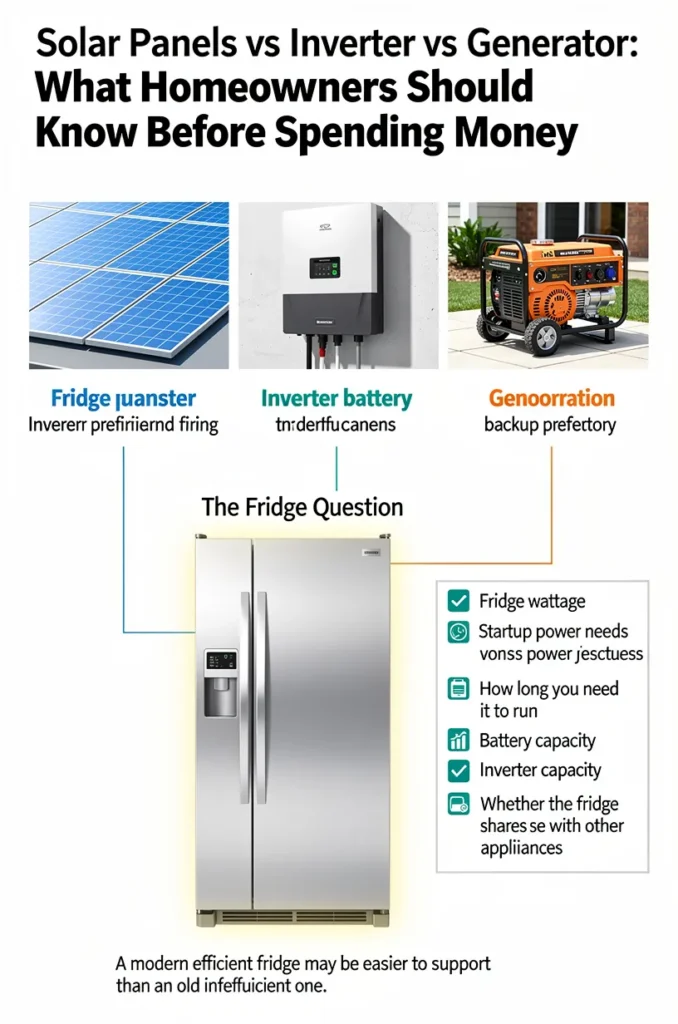
But fridges have startup power requirements, and not every small inverter system can handle every fridge. The age and efficiency of the fridge matter too.
Before buying backup power, check:
- Fridge wattage
- Startup power needs
- How long you need it to run
- Battery capacity
- Inverter capacity
- Whether the fridge shares power with other appliances
A modern efficient fridge may be easier to support than an old inefficient one.
9. Why Solar Alone May Not Help During an Outage
This surprises many homeowners.
Some solar systems are designed to shut down during grid outages for safety reasons unless they are paired with the right inverter and battery system. That means having solar panels does not automatically mean your home will have power when the grid is down.
If backup power is your main goal, ask specifically:
- Will the system work during an outage?
- Which circuits will be backed up?
- Is there battery storage?
- Is the inverter hybrid or backup-capable?
- What appliances can run?
- How long can they run?
Do not assume. Ask before you buy.
10. The Difference Between Backup Power and Saving Money
Backup power and electricity savings are related, but they are not the same thing.
A generator gives backup power, but it does not usually lower your electricity bill. It uses fuel.
A battery can provide backup power, but if it charges from the grid, savings depend on electricity prices and how the system is used.
Solar panels can reduce electricity bills, but the savings depend on sunlight, system size, energy use, export rules, battery storage, and installation cost.
A full solar and battery system can do both: reduce grid use and provide backup power. But it costs more upfront.
Decide which goal matters most:
- Lower monthly electricity costs
- Backup during outages
- Run essential appliances
- Reduce fuel dependence
- Improve home value
- Prepare for emergencies
The right system depends on the goal.
11. Common Mistake: Buying Too Small
A small inverter or portable power station can be useful, but it may not run everything people expect.
If you buy too small, you may only power a light and Wi-Fi, then feel disappointed when larger appliances cannot run.
A small system can still be valuable, but it should be used for the right purpose.
Good for small systems:
- Router
- Phone charging
- Laptop
- LED light
- Small fan
- Television for short periods
Not ideal for small systems:
- Kettle
- Oven
- Heater
- Air conditioner
- Tumble dryer
- Geyser
- Pool pump
Know the limits before buying.
12. Common Mistake: Buying Too Big
The opposite mistake is buying a large system without understanding your needs.
A large solar and battery system can be excellent, but it may not make financial sense if your household uses little electricity, has poor sunlight, has limited roof space, or does not need long backup times.
Before buying a large system, compare:
- Installation cost
- Expected savings
- Battery lifespan
- Maintenance
- Warranty
- Financing cost
- Future electricity use
- Roof condition
- Local rules and approvals
A good installer should help you size the system properly, not only sell the biggest option.
13. The Roof Space Check
Solar panels need good sunlight. If your roof is shaded by trees, nearby buildings, chimneys, or other roof structures, solar production may be lower.
Before planning solar, check:
- Roof direction
- Shade during morning and afternoon
- Roof condition
- Available space
- Local weather patterns
- Panel placement
- Future roof repairs
Installing solar on a roof that needs repairs soon can create extra cost later. If the roof is old or damaged, fix that first.
14. The Battery Lifespan Question
Batteries do not last forever. They have cycles, warranties, and performance limits. Some batteries handle daily cycling better than others.
When comparing battery systems, ask:
- What is the usable capacity?
- How many cycles is it rated for?
- What is the warranty?
- What happens if capacity drops?
- Can batteries be expanded later?
- Is the battery compatible with the inverter?
Do not compare only the sticker price. Compare usable energy and lifespan.
15. The Installation Quality Problem
A poor installation can create safety risks, performance problems, and expensive repairs.
Solar, inverters, batteries, and generators should be installed according to local electrical rules and manufacturer requirements. This is not the place to cut corners.
Before choosing an installer, check:
- Experience
- Reviews
- Warranty terms
- Product brands
- Safety standards
- Insurance
- After-sales support
- Clear written quote
A cheap installation that fails later can cost more than doing it properly from the beginning.
16. The Maintenance Question
Every system needs some level of care.
Solar panels may need cleaning depending on dust, weather, and local conditions. Generators need fuel, oil, and servicing. Batteries need proper settings and safe operating conditions. Inverters need ventilation and protection from heat and moisture.
Ask before buying:
- What maintenance is required?
- How often?
- What will it cost?
- Who handles warranty claims?
- What warning signs should you watch for?
A system that is ignored may not perform the way you expect.
17. Solar Panels vs Generator: Which Is Better?
Solar panels are better for long-term energy generation and reducing grid use, especially when paired with batteries. They cost more upfront but can reduce electricity purchases over time.
Generators are better for temporary emergency backup and high-power needs, but they require fuel and maintenance. They can be noisy and must be used safely.
Choose solar if your goal is long-term energy savings and cleaner daily power.
Choose a generator if your goal is temporary backup and you accept fuel and maintenance costs.
Choose both only if your home needs layered backup and the budget supports it.
18. Inverter vs Generator: Which Is Better?
An inverter with batteries is quieter, cleaner indoors when installed properly, and easier for everyday essentials. It is useful for lights, Wi-Fi, electronics, and selected appliances.
A generator can provide more flexible power during long outages, but it is noisy, uses fuel, and must be operated safely outdoors.
For many homes, an inverter and battery system is better for daily short outages. A generator may be useful for longer outages or heavier loads.
19. Solar vs Inverter: Which Comes First?
If your budget is limited, you may start with an inverter and battery system for backup essentials. Later, you can add solar panels if the inverter supports it.
If your goal is reducing electricity bills, solar panels may be important early, but battery storage may still be needed for evening use and backup power.
The best order depends on your goal:
- Need outage backup first: inverter + battery
- Need lower bills first: solar panels
- Need both: hybrid inverter + battery + solar
- Need emergency only: generator or portable power station
Always check compatibility before buying in stages.
20. Questions to Ask Before Buying Any Backup System
Before you accept a quote, ask:
- What appliances can this system power?
- How long can it power them?
- Will it work during an outage?
- Does it include battery storage?
- Can I add solar panels later?
- Can I add more batteries later?
- What is the warranty?
- What maintenance is needed?
- What safety certifications apply?
- What is included in the installation?
- Are there extra approval or inspection costs?
- What happens if the system fails?
A good quote should make these answers clear.
Quick Quiz: What Backup Power System Might Fit Your Home?
Answer these questions:
- Do you mainly need Wi-Fi, lights, and phone charging?
- Do you want to run a fridge during outages?
- Do you want to lower your monthly electricity bill?
- Do you want power at night?
- Do you have good roof sunlight?
- Do you want to run heavy appliances?
- Do you want a quiet system?
- Do you want a lower upfront cost?
- Do you need backup for long outages?
- Do you want a system that can grow later?
Mostly Small Essential Needs
A small inverter, battery system, or portable power station may be enough for basic backup.
Mostly Bill-Saving Needs
Solar panels may be the starting point, especially if your home uses power during the day.
Mostly Night Backup Needs
Battery storage becomes more important.
Mostly Heavy Appliance Needs
You may need a larger inverter system, carefully sized batteries, or a generator, depending on the appliances.
Mixed Needs
A hybrid solar system with batteries may be worth comparing, but get several quotes before deciding.
Final Thoughts
Solar panels, inverters, batteries, and generators all solve different problems.
Solar panels help generate electricity from sunlight. An inverter converts and manages power. Batteries store power for later. A generator creates backup electricity from fuel.
The right choice depends on your home, your budget, your electricity use, and your reason for buying.
If you want to avoid wasting money, do not start with the product. Start with your needs. List the appliances you want to power, decide how long they need to run, check your roof and electrical setup, then compare systems.
The smartest backup power system is not always the biggest or most expensive one. It is the one that matches your home.