
A high electricity bill does not always come from obvious things like air conditioning, heaters, or pool pumps. Sometimes, one of the biggest energy users is quietly sitting in a cupboard, roof space, garage, or outside utility area: the geyser or water heater.
Many households use hot water every day without thinking about how much electricity it takes to heat it. Showers, baths, laundry, dishwashing, handwashing, and cleaning all add up. If your water heater runs without a plan, loses heat through uninsulated pipes, heats water too hot, or works harder because of leaks and poor habits, it can quietly waste electricity month after month.
The good news is that you do not always need to replace the entire system to improve it. Small changes like using a geyser timer, checking the thermostat, insulating pipes, fixing leaks, and reducing unnecessary hot water use can help your home run more efficiently.
Before you spend money on solar panels, batteries, inverters, generators, or a new water heater, check these geyser and water heater mistakes first.
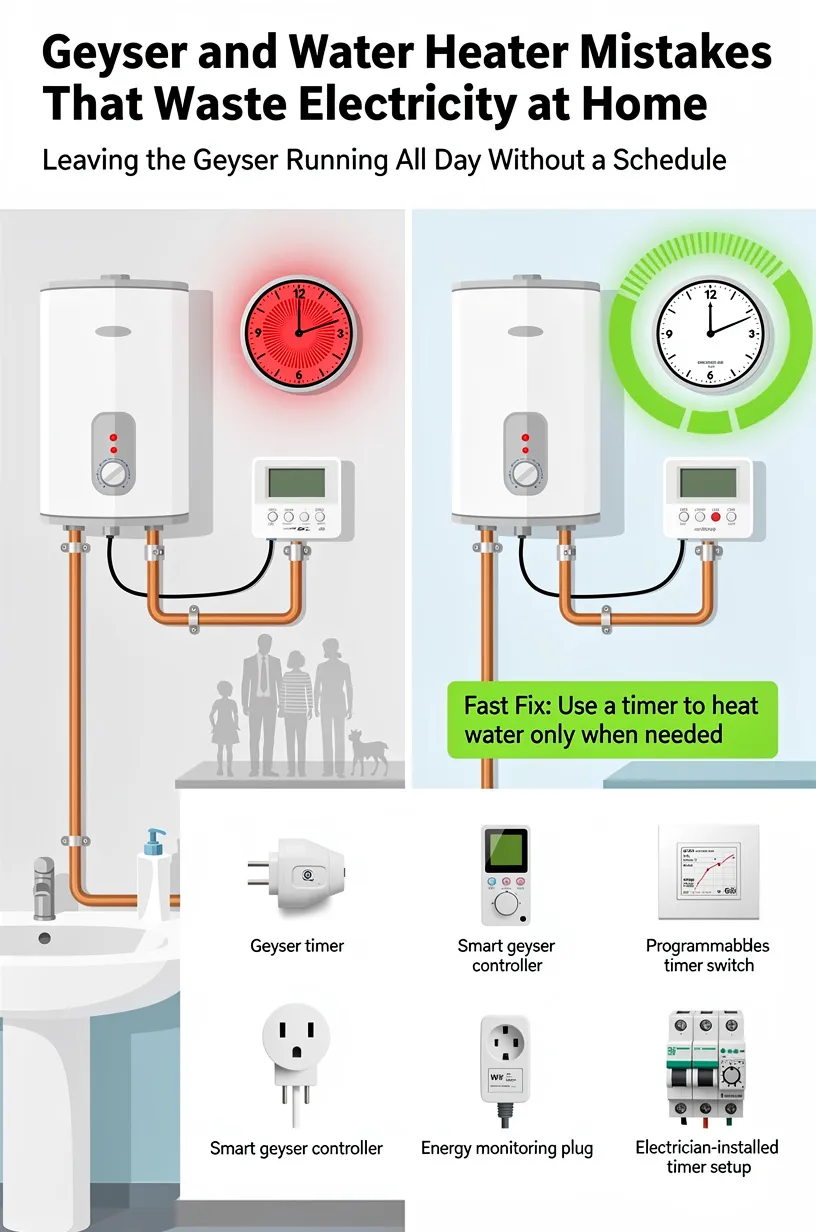
1. Leaving the Geyser Running All Day Without a Schedule
One of the biggest mistakes is letting the geyser run all day without thinking about when the household actually needs hot water.
Many homes only use large amounts of hot water in the morning and evening. If the geyser keeps heating water during times when nobody is using it, it may waste electricity maintaining temperature unnecessarily.
Fast Fix
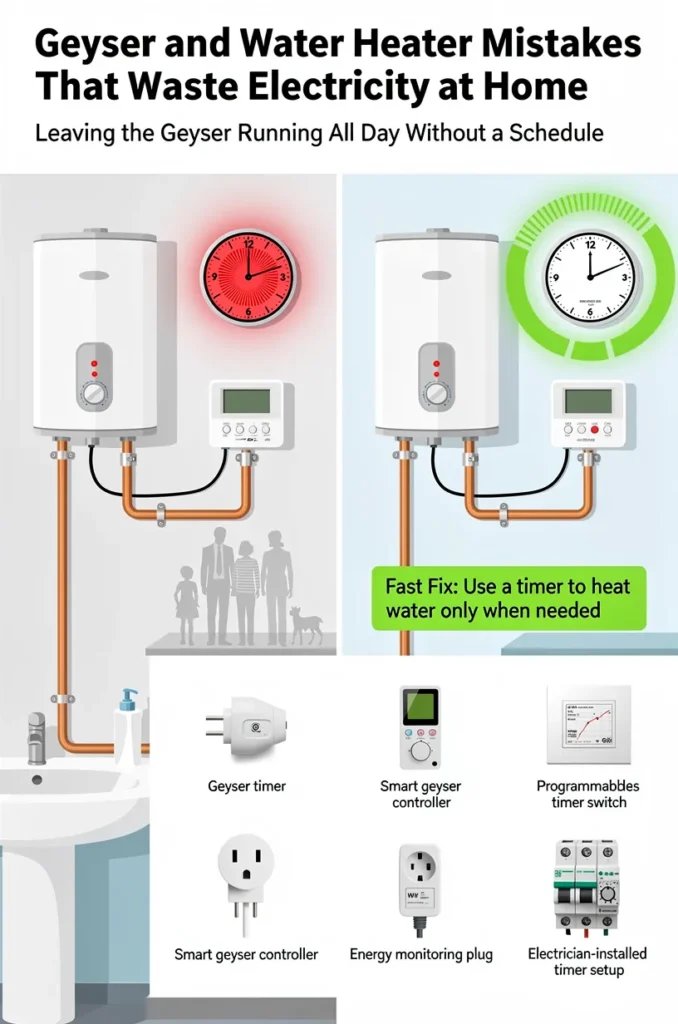
Use a geyser timer or smart geyser controller. Set it to heat water before the times your household actually needs hot water.
For example, if everyone showers between 6:00 and 8:00 in the morning, the geyser does not need to run the same way all afternoon. If hot water is mainly needed again in the evening, schedule another heating period before that time.
Smart Upgrade Ideas
- Geyser timer
- Smart geyser controller
- Programmable timer switch
- Energy monitoring plug
- Electrician-installed timer setup
A timer does not mean you should run out of hot water. It means the geyser works around your real routine instead of guessing.
2. Setting the Water Temperature Too High
Hotter water uses more energy. If the geyser thermostat is set higher than necessary, the system has to work harder to heat and maintain that temperature.
Water that is too hot can also be uncomfortable and may need to be mixed with more cold water at the tap or shower. That can mean you paid to heat water hotter than you actually needed.
Fast Fix
Check your geyser or water heater temperature setting. Many households use a setting around 60°C, but the safe and suitable temperature can depend on your system, household needs, and local guidance.
Do not change electrical or plumbing settings yourself if you are not qualified. If needed, ask a qualified electrician or plumber to check the thermostat safely.
Smart Upgrade Ideas
- Thermostat check
- Professional geyser inspection
- Smart geyser controller
- Energy-efficient water heater
- Heat pump water heater
Temperature control is one of the simplest ways to stop unnecessary water heating.
3. Ignoring Geyser Blankets and Tank Insulation
A water heater stores hot water. If the tank loses heat quickly, the system may need to reheat more often.
A geyser blanket or water heater insulation can help reduce heat loss from the tank. This is especially useful for older tanks or installations in colder areas.
Fast Fix
Check whether your water heater tank is insulated. If it is not, compare geyser blankets or water heater insulation products designed for your system type.
Do not block vents, safety valves, or access areas. If you are unsure, ask a professional.
Smart Upgrade Ideas
- Geyser blanket
- Hot water tank jacket
- Water heater insulation
- Pipe insulation
- Professional installation check
Insulation is not exciting, but it can help your system keep heat for longer.
4. Forgetting About Pipe Insulation
Even if the tank is insulated, hot water can lose heat while moving through pipes. Exposed hot water pipes can waste heat before the water even reaches the tap or shower.
This is especially noticeable when taps are far from the water heater. You turn on the hot water, wait, and watch unused water run down the drain while the pipe warms up.
Fast Fix
Insulate accessible hot water pipes, especially pipes near the water heater and long pipe runs.
Pipe insulation is a practical upgrade because it helps reduce heat loss and can make hot water arrive more efficiently at fixtures.
Smart Upgrade Ideas
- Foam pipe insulation
- Hot water pipe lagging
- Insulated pipe sleeves
- Professional plumbing check
- Shorter pipe runs during renovation
Small heat losses become expensive when they happen every day.
5. Taking Long Hot Showers Without Noticing
A long hot shower feels good, but it can use a lot of hot water. When the household takes multiple long showers every day, the geyser has to work harder to replace the hot water used.
This does not mean nobody should enjoy a comfortable shower. It means shower habits matter.
Fast Fix
Shorten showers slightly and use a water-efficient showerhead if suitable for your plumbing system.
Even reducing shower time by a few minutes can reduce hot water demand across the household.
Smart Upgrade Ideas
- Low-flow showerhead
- Shower timer
- Thermostatic shower mixer
- Water-saving bathroom fixtures
- Efficient hot water schedule
Hot water savings often start in the bathroom.
6. Using Hot Water for Every Laundry Load
Many people wash clothes with hot water out of habit. But not every load needs hot water.
Heating water for laundry can increase electricity use, especially if you wash frequently. Cold or warm water can work for many everyday clothing loads, depending on fabric, detergent, hygiene needs, and soil level.
Fast Fix
Use cold water for normal clothing when possible. Save hot water cycles for towels, bedding, heavily soiled items, or specific hygiene needs.
Also wash full loads instead of many small loads.
Smart Upgrade Ideas
- Cold-water laundry detergent
- Energy-efficient washing machine
- Laundry schedule
- Full-load washing system
- Solar water heating
Laundry habits can quietly increase hot water demand.
7. Letting Hot Water Leaks Continue
A dripping hot water tap is more than a plumbing annoyance. It can waste both water and electricity because the geyser must replace and reheat the lost hot water.
Small leaks can become expensive because they continue all day and all night.
Fast Fix
Check taps, showers, valves, and visible pipes for leaks. Listen for running water and inspect areas around the geyser.
Fix leaks quickly. If you cannot identify the source, call a plumber.
Smart Upgrade Ideas
- Tap washer replacement
- Leak detection
- Mixer repair
- Professional plumbing inspection
- Water pressure check
A leak is one of the worst types of energy waste because it gives you no comfort in return.
8. Ignoring the Distance Between the Geyser and Taps
If your water heater is far from the bathroom or kitchen, you may waste water and heat while waiting for hot water to arrive.
This can become a daily problem in larger homes or homes with awkward plumbing layouts.
Fast Fix
During renovations, think about hot water distance. If you are remodeling a bathroom, kitchen, or laundry area, ask whether the layout can reduce hot water waste.
In some homes, point-of-use water heaters or better pipe insulation may help, but the right solution depends on the property.
Smart Upgrade Ideas
- Pipe insulation
- Point-of-use water heater
- Plumbing layout review
- Bathroom renovation planning
- Kitchen renovation planning
Hot water efficiency is easier to improve when you plan it before renovating.
9. Buying a New Water Heater Without Comparing Running Costs
The cheapest water heater upfront may not be the cheapest over time. A system that uses more electricity every month can cost more in the long run.
When comparing systems, many people focus only on the installation price and ignore efficiency, capacity, maintenance, warranty, and expected usage.
Fast Fix
Compare total cost, not only purchase price.
Ask:
- How much energy does it use?
- What size does my household need?
- What is the warranty?
- What maintenance is required?
- Can it work with solar?
- Is a heat pump water heater a better option?
- Is a solar water heater practical for this home?
Smart Upgrade Ideas
- Energy-efficient water heater
- Heat pump water heater
- Solar water heater
- Correct system sizing
- Professional quote comparison
The right system should match your household, not just your budget today.
10. Choosing the Wrong Size Water Heater
A water heater that is too small may run constantly and leave people without enough hot water. A system that is too large may heat more water than the household needs.
Both mistakes can waste money.
Fast Fix
Choose the size based on household needs, number of people, hot water habits, bathrooms, showers, and appliance use.
Do not guess. Ask a professional to help size the system properly.
Smart Upgrade Ideas
- Water heater sizing guide
- Professional plumber assessment
- Household hot water audit
- Correct geyser capacity
- Heat pump sizing
The best water heater is not always the biggest one. It is the one that fits your actual usage.
11. Forgetting About Heat Pump Water Heaters
A heat pump water heater can be more efficient than a traditional electric resistance water heater because it moves heat instead of only generating heat directly.
It may cost more upfront, but for some households it can reduce water heating electricity use over time.
Fast Fix
If your geyser is old or your electricity bill is high, compare heat pump water heaters before replacing the system with the same type.
Check installation requirements, climate suitability, noise, placement, maintenance, warranty, and household hot water demand.
Smart Upgrade Ideas
- Heat pump water heater
- Hybrid water heater
- Professional energy assessment
- Water heater replacement quote
- Efficient hot water system
A heat pump may not be the right fit for every home, but it is worth comparing.
12. Assuming Solar Panels Automatically Fix Hot Water Costs
Solar panels can help reduce electricity use, but they do not automatically solve all hot water costs.
If your geyser runs mostly at night, and you have no battery storage or solar water heating system, solar panels alone may not cover the water heating demand.
Fast Fix
Understand the difference between solar panels and a solar water heater.
Solar panels make electricity. A solar water heater uses solar energy to heat water. A solar PV system can support electric loads, but the system design matters.
Smart Upgrade Ideas
- Solar water heater
- Solar PV panels
- Hybrid inverter
- Battery backup
- Smart geyser controller
- Energy audit
Before buying solar, ask how the system affects water heating specifically.
13. Not Servicing or Checking the System
Water heaters need attention. Sediment buildup, faulty thermostats, pressure problems, worn valves, leaks, and old parts can reduce performance or create safety issues.
Many people ignore the system until it fails.
Fast Fix
Schedule a professional inspection if your water heater is old, noisy, leaking, overheating, underheating, or behaving differently than usual.
Do not attempt risky electrical or plumbing repairs yourself.
Smart Upgrade Ideas
- Plumber inspection
- Electrician inspection
- Valve check
- Thermostat check
- Leak check
- Water heater maintenance
Maintenance can prevent expensive surprises later.
14. Using Baths Too Often When Showers Would Use Less
A full bath can use a lot of hot water. If several people take baths regularly, the geyser may need to reheat more often.
Baths are not “bad,” but they are usually more hot-water intensive than short showers.
Fast Fix
Use showers more often and keep baths occasional if your goal is reducing hot water use.
If children need baths, avoid filling the tub more than necessary.
Smart Upgrade Ideas
- Efficient showerhead
- Shower timer
- Bathroom water-saving fixtures
- Hot water usage routine
- Family energy checklist
Small bathroom habits can make a real difference over a month.
15. Not Tracking Hot Water Habits
If you do not know when your household uses hot water, it is hard to improve.
You may assume the geyser is the problem when the real issue is long showers, hot laundry, leaks, or poor scheduling.
Fast Fix
Track hot water habits for one week.
Write down:
- Shower times
- Bath use
- Laundry temperature
- Dishwashing habits
- Geyser schedule
- Times when hot water runs out
- Any visible leaks
After one week, you will know what needs fixing first.
Smart Upgrade Ideas
- Home energy checklist
- Smart geyser monitor
- Water usage tracker
- Weekly household routine
- Prepaid electricity tracking
Tracking turns guesses into decisions.
Quick Checklist: Is Your Geyser Wasting Electricity?
Answer yes or no:
- Does your geyser run all day without a timer?
- Is the temperature set higher than needed?
- Is the geyser missing a blanket or insulation?
- Are hot water pipes exposed?
- Do people take long hot showers daily?
- Do you wash most laundry with hot water?
- Are there any dripping hot taps?
- Do you wait a long time for hot water at taps?
- Is the water heater old or poorly maintained?
- Have you never compared heat pump or solar water heating options?
If you answered “yes” to several of these, your hot water system may be costing more than it should.
7-Day Hot Water Saving Plan
Day 1: Check the Geyser Schedule
Look at when your household actually uses hot water. If the geyser runs all day, consider a timer or smart controller.
Day 2: Check the Temperature
Ask a qualified person to check whether the temperature setting is appropriate and safe.
Day 3: Check Insulation
Look for a geyser blanket, tank insulation, and exposed hot water pipes.
Day 4: Check Shower Habits
Reduce shower time slightly and consider a water-efficient showerhead.
Day 5: Check Laundry Settings
Use cold water for normal clothing where appropriate and avoid small hot-water loads.
Day 6: Check Leaks
Inspect hot water taps, showerheads, valves, and visible pipes.
Day 7: Compare Upgrade Options
If the system is old or expensive to run, compare a heat pump water heater, solar water heater, or more efficient replacement.
Final Thoughts
A geyser or water heater can waste electricity quietly because it works in the background every day. The mistake is not using hot water. The mistake is heating more water than you need, losing heat unnecessarily, ignoring leaks, and buying upgrades without understanding your household’s real usage.
Start with the simple fixes first: geyser timer, temperature check, insulation, pipe lagging, shorter showers, cold-water laundry, and leak repair.
Then compare bigger upgrades like heat pump water heaters, solar water heaters, and smarter hot water controls.
The goal is simple: keep the comfort, reduce the waste, and make your home more efficient.