
Electricity costs can feel frustrating, especially when your home does not seem to be using anything “extra.” The lights are normal, the geyser is normal, the fridge is always on, and the washing machine is used like usual. But small home habits can quietly increase your electricity bill every month.
In South Africa, electricity usage is not only about how many appliances you own. It is also about when you use them, how efficiently they run, how your geyser is managed, whether your home loses heat or cool air, and whether devices are wasting power in the background.
The good news is that you do not need to renovate your whole house to start saving. Many electricity-saving changes are simple. Some are free. Others are affordable upgrades that can make your home more comfortable and efficient over time.
Before spending money on solar panels, inverters, generators, batteries, or a major home upgrade, check these common electricity mistakes first.
1. Leaving the Geyser Running Without a Plan
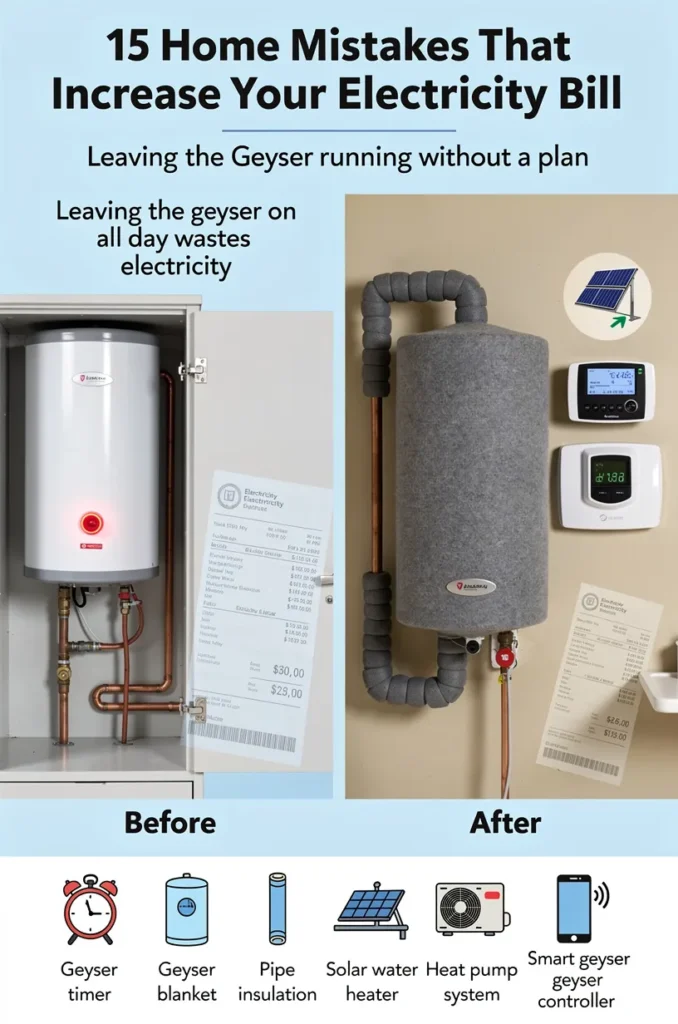
The geyser is one of the biggest electricity users in many South African homes. If it runs all day without a timer, blanket, insulation, or schedule, it may be using more electricity than necessary.
Many households only think about the geyser when there is no hot water. But a geyser that heats water when nobody needs it can add unnecessary cost to the monthly electricity bill.
Fast Fix
Use a geyser timer so the geyser heats water only when your household actually needs it. For many homes, that may be before morning showers and again before evening use.
Also consider a geyser blanket and pipe insulation to reduce heat loss. If your geyser is old or inefficient, compare the long-term cost of a heat pump or solar water heater.
Smart Upgrade Ideas
- Geyser timer
- Geyser blanket
- Pipe insulation
- Solar water heater
- Heat pump system
- Smart geyser controller
A geyser strategy can make a noticeable difference because water heating is one of the most important places to control electricity use.
2. Using Old Light Bulbs Instead of LED Bulbs
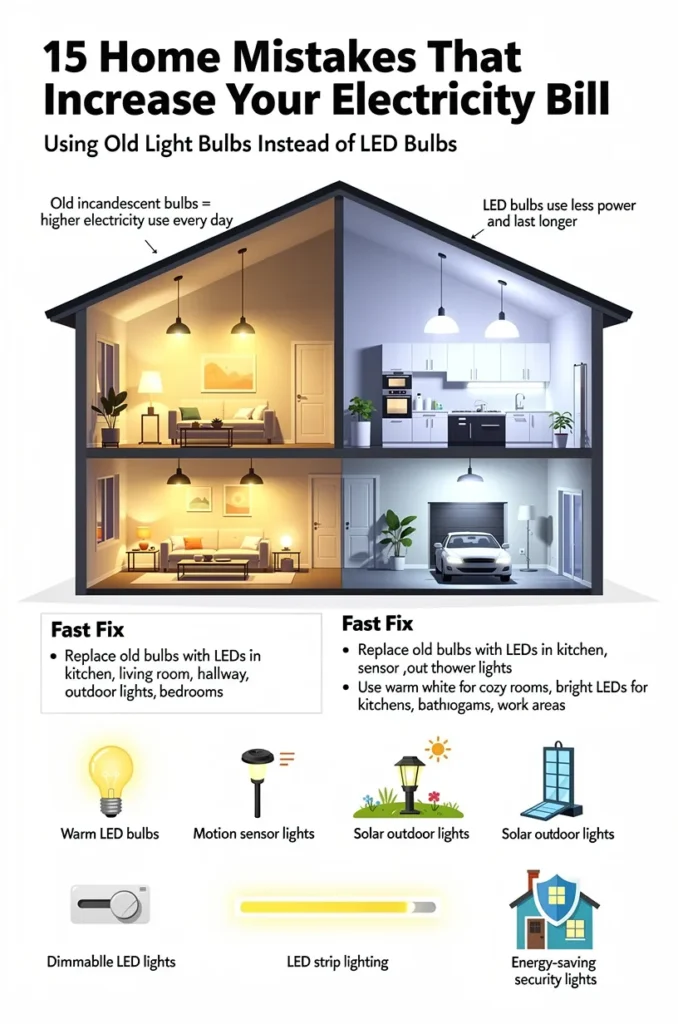
Lighting may seem small compared to the geyser, but old bulbs can waste electricity every day. If your home still uses older incandescent or inefficient bulbs, the cost adds up room by room.
LED bulbs use much less electricity and last longer than traditional bulbs. They also come in warm white, cool white, and daylight options, so you can choose the right mood for each room.
Fast Fix
Replace old bulbs with LED bulbs, especially in rooms where lights stay on for long periods. Start with the kitchen, living room, hallway, outdoor lights, and bedrooms.
Use warm white LEDs for cozy rooms and brighter task lighting for kitchens, bathrooms, garages, and work areas.
Smart Upgrade Ideas
- Warm LED bulbs
- Motion sensor lights
- Solar outdoor lights
- Dimmable LED lights
- LED strip lighting
- Energy-saving security lights
Small lighting changes can improve both your electricity bill and the way your home feels.
3. Running the Pool Pump Too Long
A pool pump can quietly become one of the most expensive appliances in a home. Many people run the pump longer than needed because they are afraid the pool will turn green.
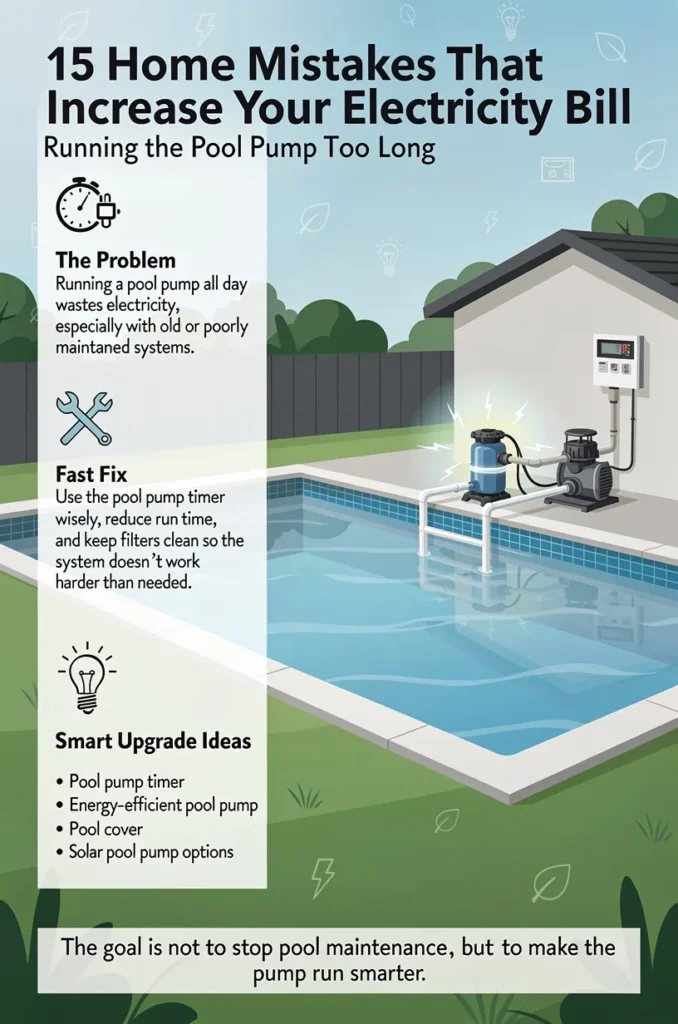
But running a pool pump all day can waste electricity, especially if the system is old, poorly maintained, or not set on a proper timer.
Fast Fix
Check your pool pump timer and reduce unnecessary running time where possible. Clean the filter, remove leaves, and keep the system maintained so it does not work harder than needed.
If the pool pump is old, compare the cost of a more efficient pump.
Smart Upgrade Ideas
- Pool pump timer
- Energy-efficient pool pump
- Pool cover
- Filter maintenance
- Solar pool pump options
The goal is not to stop pool maintenance. The goal is to make the pump run smarter.
4. Leaving Appliances on Standby
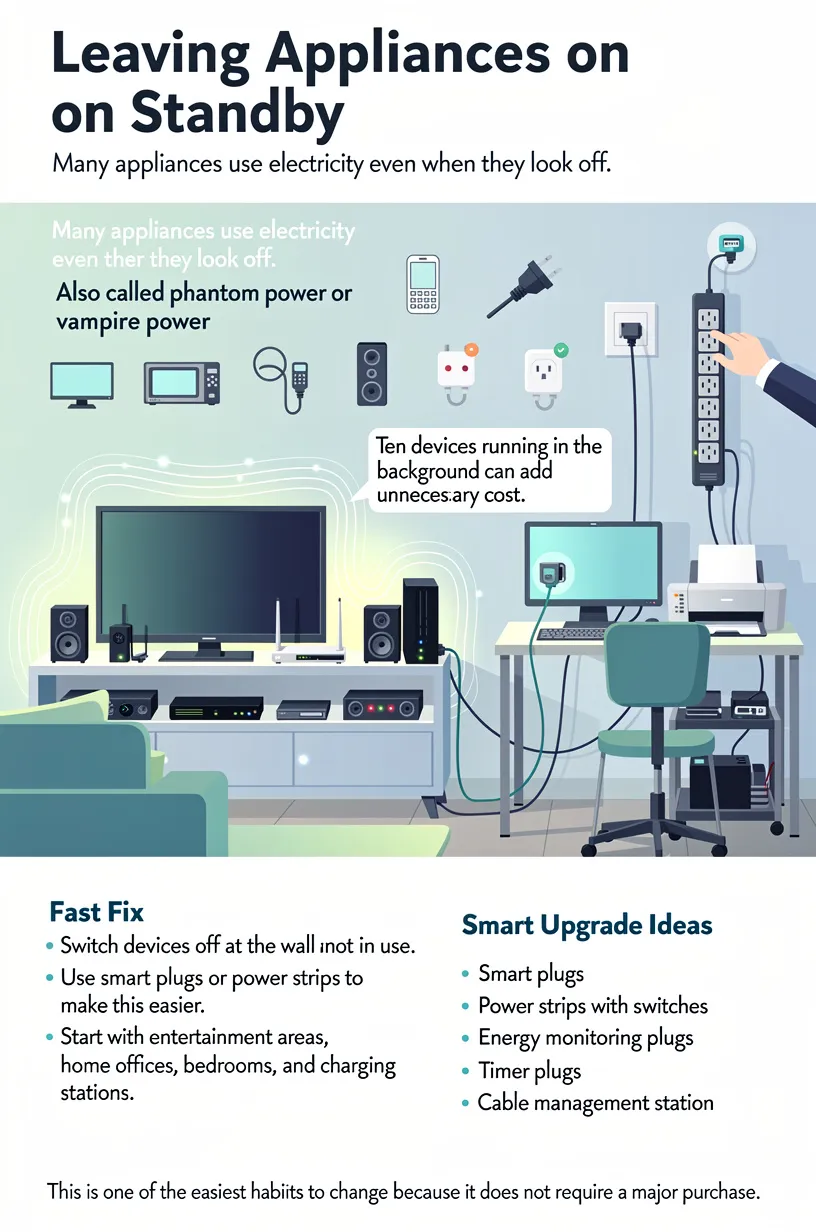
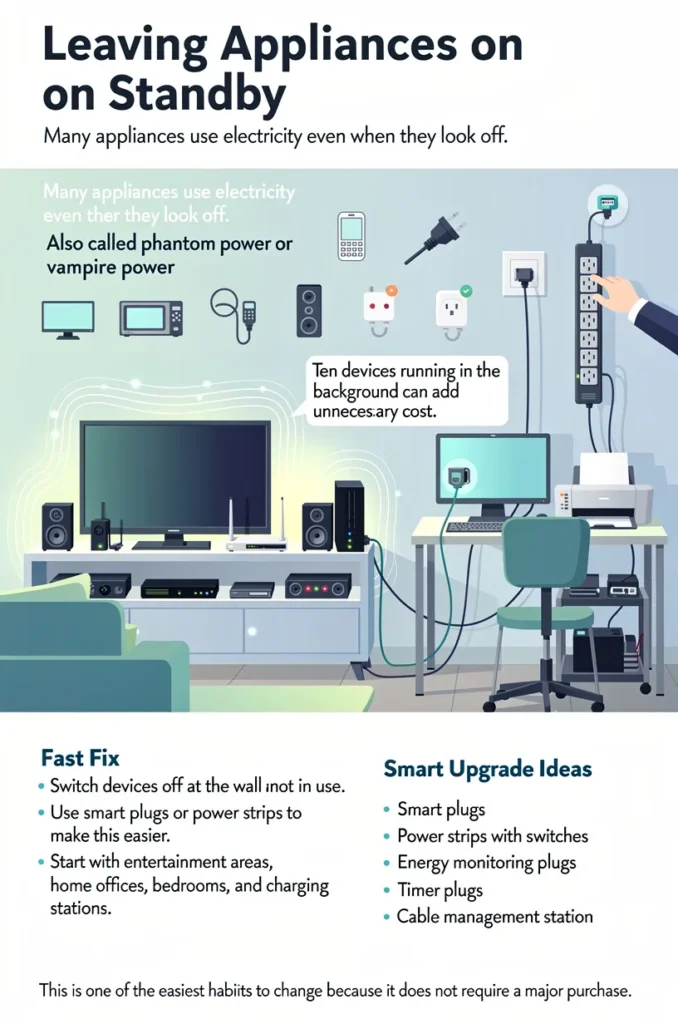
Many appliances use electricity even when they look “off.” TVs, gaming consoles, chargers, microwaves, computers, routers, printers, and sound systems can draw standby power.
This is often called phantom power or vampire power. One device may not seem like much, but ten devices running in the background can add unnecessary cost.
Fast Fix
Switch devices off at the wall when not in use. Use smart plugs or power strips to make this easier.
Start with entertainment areas, home offices, bedrooms, and charging stations.
Smart Upgrade Ideas
- Smart plugs
- Power strips with switches
- Energy monitoring plugs
- Timer plugs
- Cable management station
This is one of the easiest habits to change because it does not require a major purchase.
5. Using the Tumble Dryer Too Often
A tumble dryer is convenient, but it can be expensive to run regularly. In sunny or windy weather, using a washing line can save electricity and reduce wear on clothing.
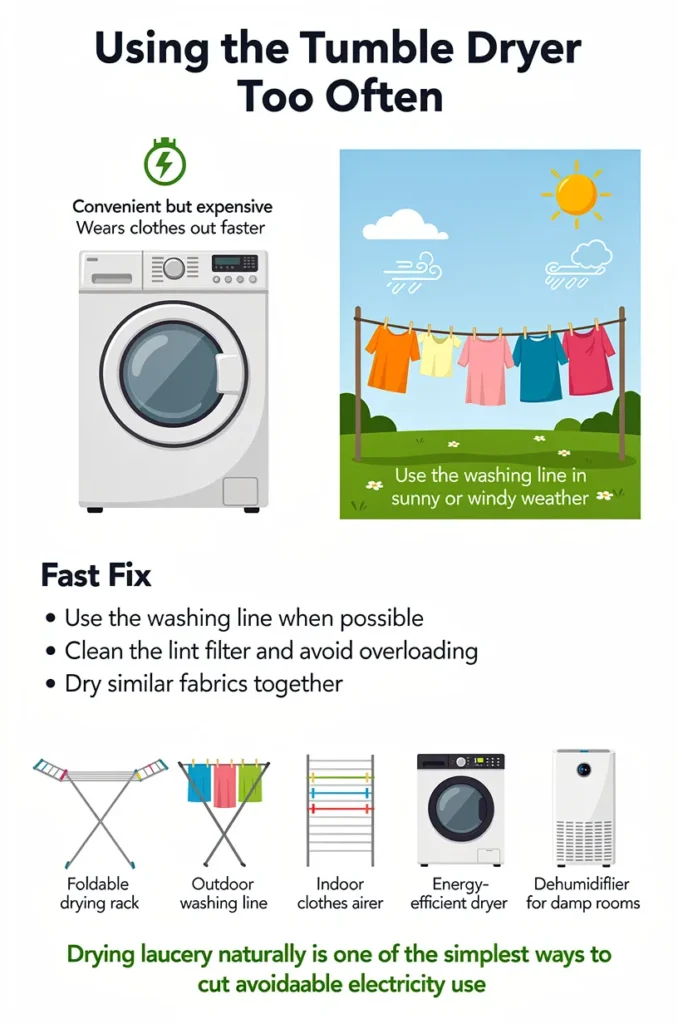
Many households use the dryer out of habit, even when clothes could dry naturally.
Fast Fix
Use the washing line when possible. If you must use the dryer, clean the lint filter, avoid overloading it, and dry similar fabrics together.
For small apartments, consider a folding drying rack near good airflow.
Smart Upgrade Ideas
- Foldable drying rack
- Outdoor washing line
- Indoor clothes airer
- Energy-efficient dryer
- Dehumidifier for damp rooms
Drying laundry naturally is one of the simplest ways to cut avoidable electricity use.
6. Heating Rooms You Are Not Using
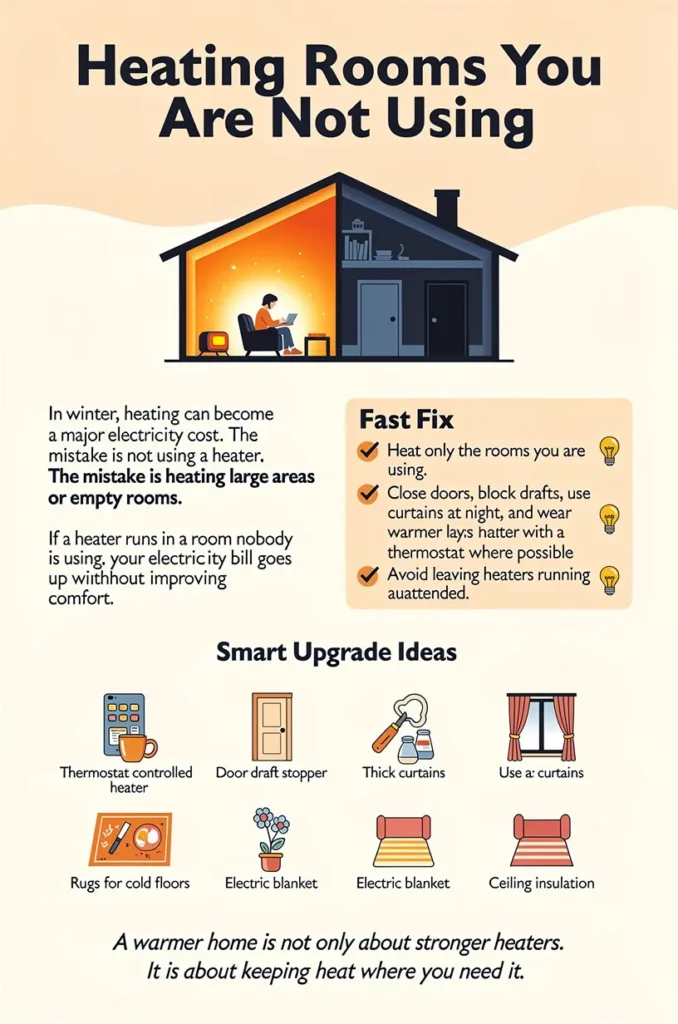
In winter, heating can become a major electricity cost. The mistake is not using a heater. The mistake is heating large areas or empty rooms.
If a heater runs in a room nobody is using, your electricity bill goes up without improving comfort.
Fast Fix
Heat only the rooms you are using. Close doors, block drafts, use curtains at night, and wear warmer layers indoors.
Use a heater with a thermostat where possible. Avoid leaving heaters running unattended.
Smart Upgrade Ideas
- Thermostat-controlled heater
- Door draft stopper
- Thick curtains
- Rugs for cold floors
- Electric blanket
- Ceiling insulation
A warmer home is not only about stronger heaters. It is about keeping heat where you need it.
7. Poor Ceiling Insulation
If your home loses heat in winter or gains too much heat in summer, appliances have to work harder. Poor insulation can make heaters and air conditioners run longer than necessary.
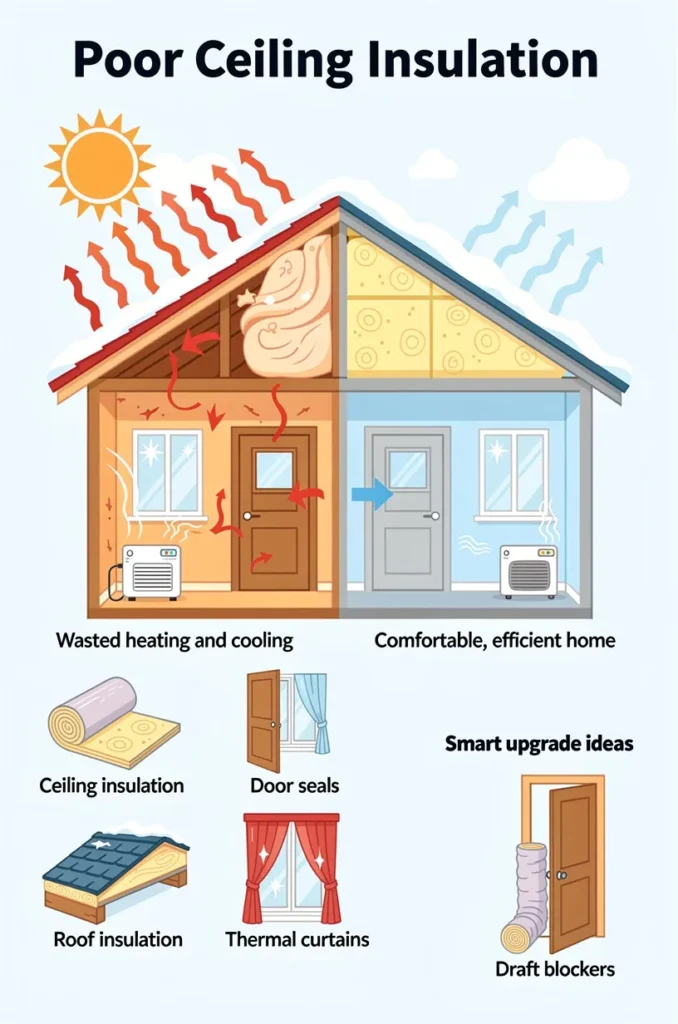
Many people focus on buying more appliances before checking whether the home is wasting energy through the roof, windows, gaps, and drafts.
Fast Fix
Check ceiling insulation, roof leaks, gaps around doors, and drafty windows. Even small improvements can make rooms more comfortable.
If you own the home, ceiling insulation can be a long-term energy-saving upgrade.
Smart Upgrade Ideas
- Ceiling insulation
- Door seals
- Window seals
- Thermal curtains
- Roof insulation
- Draft blockers
Insulation may not be as exciting as a new appliance, but it can make a home more efficient every day.
8. Using Air Conditioning Without Managing Heat
Air conditioning can use a lot of electricity when the home is not prepared properly. If sunlight pours through windows, doors stay open, filters are dirty, or the temperature is set too low, the air conditioner works harder.
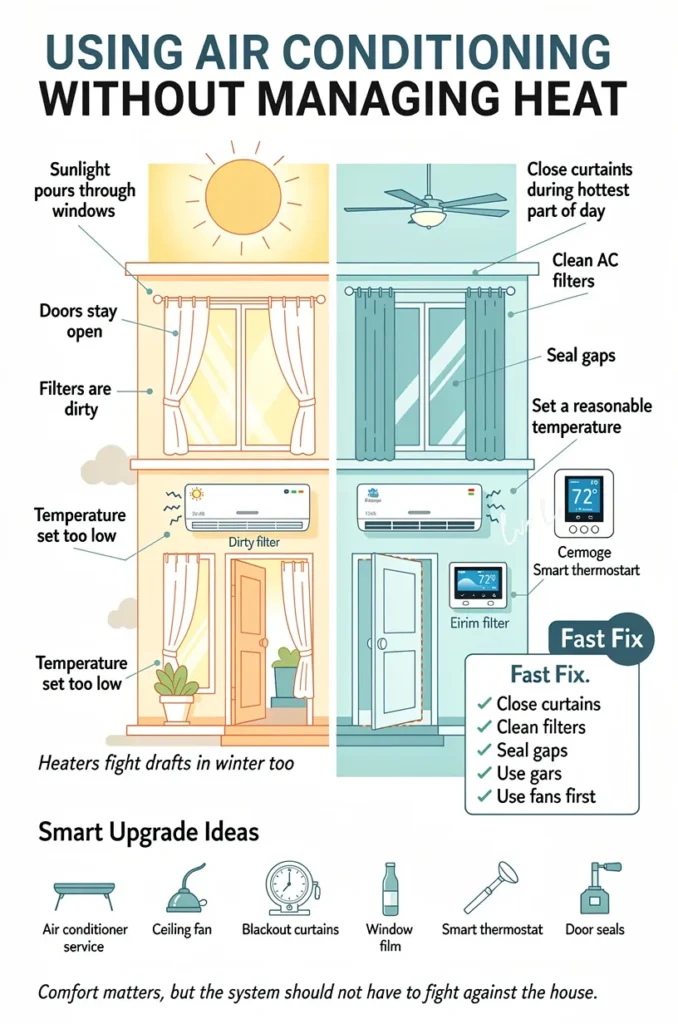
The same problem happens in winter when heaters fight against drafts and open doors.
Fast Fix
Close curtains during the hottest part of the day, clean air conditioner filters, seal gaps, and set a reasonable temperature.
Use fans to move air before relying completely on air conditioning.
Smart Upgrade Ideas
- Air conditioner service
- Ceiling fan
- Blackout curtains
- Window film
- Smart thermostat
- Door seals
Comfort matters, but the system should not have to fight against the house.
9. Washing Clothes With Hot Water Too Often
Heating water for laundry can use more electricity than many people realize. Most everyday laundry can be washed in cold or warm water, depending on the fabric and hygiene needs.
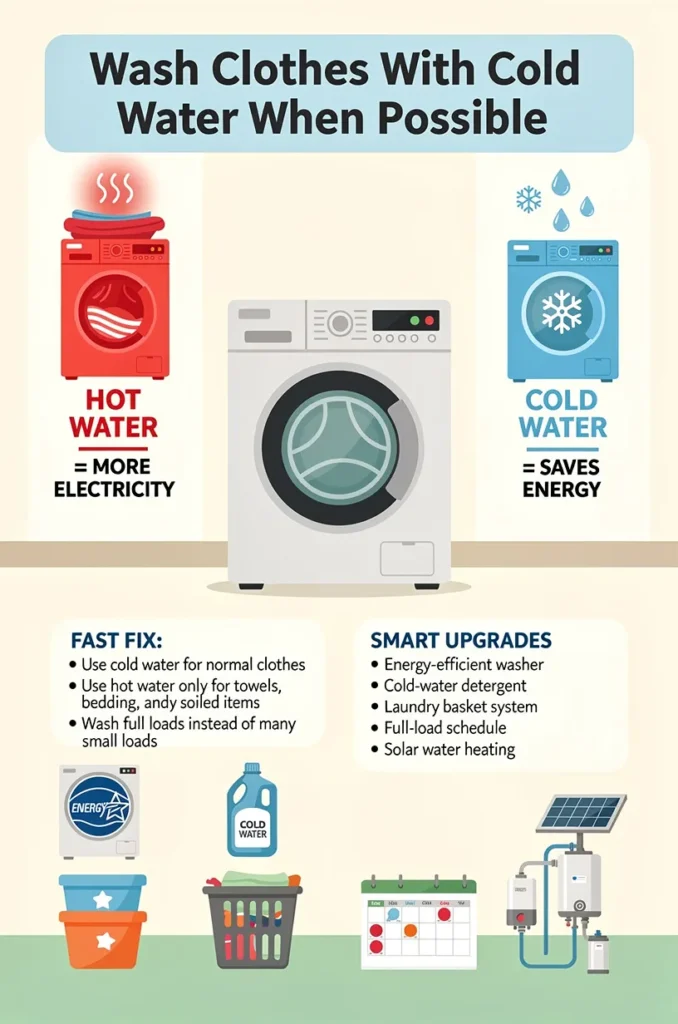
Using hot water for every load can increase electricity use unnecessarily.
Fast Fix
Use cold water for normal clothing when possible. Save hot water cycles for towels, bedding, heavily soiled items, or hygiene-specific needs.
Wash full loads instead of many small loads.
Smart Upgrade Ideas
- Energy-efficient washing machine
- Cold-water laundry detergent
- Laundry basket system
- Full-load washing schedule
- Solar water heating
This habit change is simple and can reduce unnecessary water heating.
10. Opening the Fridge Too Often or Overloading It
The fridge runs all day, so small inefficiencies matter. Leaving the door open, putting hot food inside, poor seals, dust behind the fridge, or overloading shelves can make it work harder.
A fridge that works harder uses more electricity.
Fast Fix
Check door seals, clean the back coils if accessible, avoid putting hot food directly inside, and keep the fridge organized so you can find things quickly.
Do not place the fridge next to a hot oven or in direct sunlight if you can avoid it.
Smart Upgrade Ideas
- Fridge thermometer
- Storage containers
- Fridge organization bins
- Replacement door seal
- Energy-efficient fridge
A well-managed fridge is a quiet but important energy saver.
11. Cooking Inefficiently
Cooking can use more electricity when pots are the wrong size, lids are not used, frozen food is cooked without thawing, or the oven is switched on for very small meals.
The stove and oven can be high-use appliances, especially during busy evening hours.
Fast Fix
Use lids on pots, match pot size to the plate, avoid opening the oven door repeatedly, and use smaller appliances when appropriate.
For small meals, an air fryer, microwave, or pressure cooker may use less electricity than heating a full oven.
Smart Upgrade Ideas
- Pressure cooker
- Air fryer
- Microwave cooking containers
- Induction-friendly cookware
- Pot lids
- Slow cooker
Cooking smarter does not mean cooking less. It means using the right tool for the job.
12. Ignoring Prepaid Electricity Usage Patterns
If you use prepaid electricity, it can be easy to focus only on how often you buy units instead of what is driving the usage.
Without tracking, you may not notice that electricity disappears faster on laundry days, cold nights, pool pump days, or when the geyser runs longer than usual.
Fast Fix
Track your usage for two weeks. Write down when you buy electricity, how many units you buy, and what happened that day.
Look for patterns: geyser use, heater use, pool pump use, laundry, cooking, or guests.
Smart Upgrade Ideas
- Electricity usage tracker
- Smart plug monitor
- Prepaid meter log
- Geyser timer
- Appliance schedule
You cannot fix what you cannot see. Tracking helps you find the biggest problem first.
13. Not Preparing for Load Shedding Properly
Load shedding can lead to expensive habits. Some households buy the wrong backup system, overuse generators, charge devices inefficiently, or leave appliances running when power returns.
A rushed backup power setup can cost more than a planned one.
Fast Fix
Decide what truly needs backup power. Usually, that means Wi-Fi, lights, phones, a laptop, security, and maybe a TV — not every appliance in the house.
Choose backup power based on your real needs and budget.
Smart Upgrade Ideas
- Rechargeable LED lights
- UPS for Wi-Fi
- Portable power station
- Inverter system
- Battery backup
- Solar panels
- Surge protectors
A backup plan should protect comfort and essentials without wasting money on the wrong system.
14. Skipping Surge Protection
Power interruptions and electrical surges can damage devices. Replacing electronics, routers, TVs, fridges, or computers is expensive.
Surge protection will not lower the monthly bill directly, but it can protect your home from costly damage.
Fast Fix
Use surge protectors for sensitive electronics and important appliances. After power returns, wait a few minutes before switching on major devices if needed.
Smart Upgrade Ideas
- Surge protector plug
- Surge-protected power strip
- DB board surge protection
- UPS for Wi-Fi router
- Appliance protection plug
Protecting appliances is part of smart home cost management.
15. Buying Solar Without Understanding Your Needs
Solar can be a strong long-term upgrade, but buying the wrong system can be expensive. Some people buy panels when they really need battery backup. Others buy an inverter that cannot handle their needs.
A solar or backup power system should match your household usage, roof conditions, budget, and load-shedding needs.
Fast Fix
Before buying, list your essential loads: Wi-Fi, lights, fridge, laptop, security system, and other must-have items.
Ask installers to explain the difference between grid-tied solar, hybrid solar, battery backup, and generator backup.
Smart Upgrade Ideas
- Solar panels
- Hybrid inverter
- Battery backup
- Load assessment
- Solar quote comparison
- Energy audit
- Smart energy monitor
The best system is not always the biggest one. It is the one that matches your home.
Quick Electricity Bill Checklist
Use this checklist before spending money on a major upgrade.
- Is your geyser on a timer?
- Are you using LED bulbs?
- Is the pool pump running longer than needed?
- Are devices switched off at the wall?
- Do you use the tumble dryer often?
- Are heaters running in empty rooms?
- Is your ceiling insulated?
- Are air conditioner filters clean?
- Do you wash everything with hot water?
- Is your fridge seal working properly?
- Are you tracking prepaid electricity use?
- Do you have surge protection?
- Do you know what needs backup power during load shedding?
If you answered “no” to several of these, your home may be using more electricity than necessary.
7-Day Home Electricity Saving Plan
Day 1: Geyser Check
Check the geyser schedule. If it has no timer, consider installing one. Look at geyser blanket and pipe insulation options.
Day 2: Lighting Check
Replace old bulbs in the most-used rooms with LED bulbs. Start with the kitchen, living room, hallway, and outdoor lights.
Day 3: Standby Power Check
Switch off chargers, entertainment devices, computers, printers, and unused appliances at the wall.
Day 4: Laundry Check
Use cold water for normal loads and dry clothes naturally where possible.
Day 5: Fridge Check
Check the door seal, clean around the fridge, and organize shelves so the door stays open for less time.
Day 6: Heating and Cooling Check
Close gaps, use curtains, clean filters, and heat or cool only the rooms you use.
Day 7: Backup Power Check
List what you truly need during load shedding before buying solar, batteries, inverters, or generators.
Final Thoughts
A high electricity bill is not always caused by one big problem. It is often caused by many small habits that repeat every day.
The biggest places to check first are the geyser, lighting, pool pump, heaters, air conditioner, fridge, laundry, and standby power. Once those are under control, you can look at bigger upgrades like insulation, solar water heating, heat pumps, solar panels, inverters, batteries, and smart energy monitors.
The goal is not to make your home uncomfortable. The goal is to make your home smarter.
Start with the easy fixes first. Then invest in upgrades that match your real household needs.