

When the pantry becomes a maze of mismatched boxes, it’s hard to feel calm in the heart of the home. A well‑thought‑out pantry not only saves time but also creates a visual pause before you start cooking. Below are seven distinct approaches that turn a chaotic cupboard into a tidy, inviting space. Each concept can be adapted to a small apartment pantry or a sprawling walk‑in, and the details are meant to guide you from the overall look down to the practical steps you’ll need.
1. Open Shelving with Uniform Containers
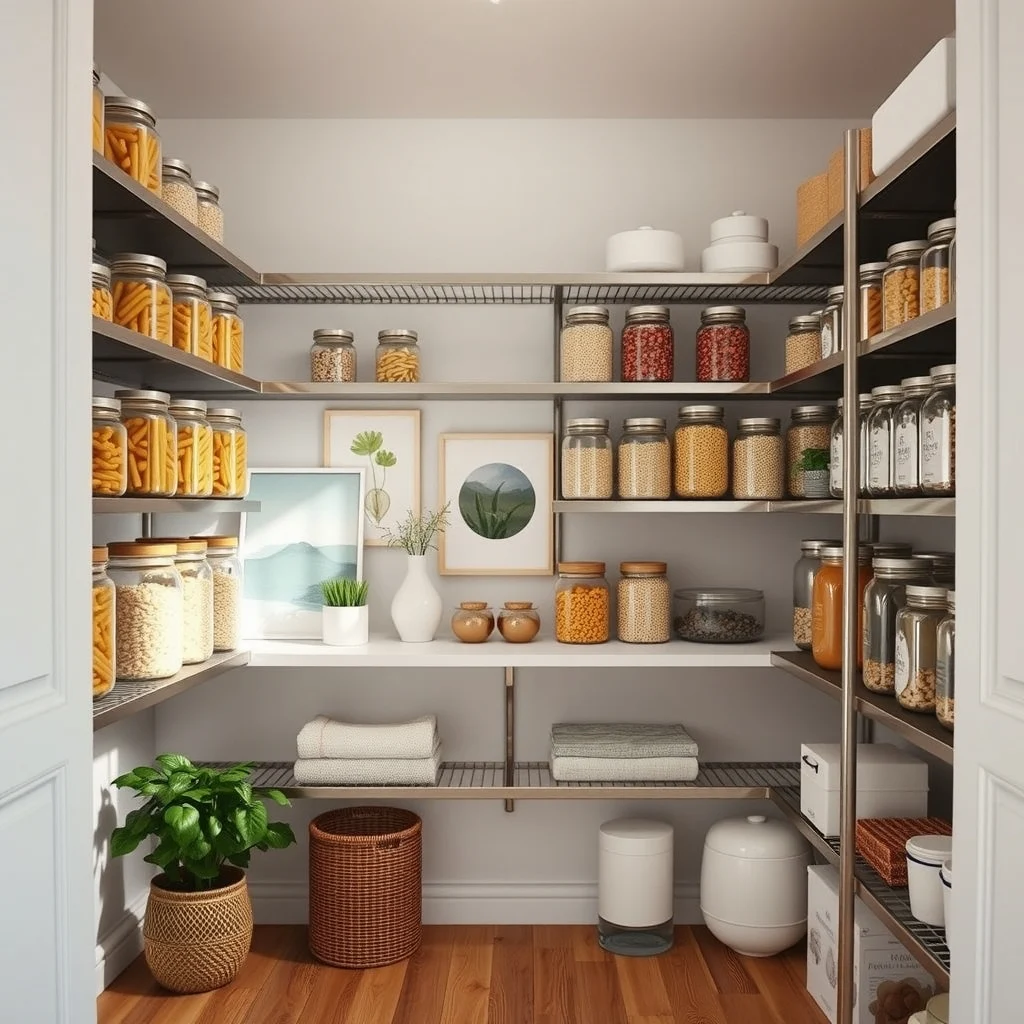
Imagine a row of sleek, clear containers sitting on brushed‑nickel brackets, each one holding a single category of dry goods. The uniform shape creates a rhythm that draws the eye across the shelf, while the transparent walls let you see exactly what you have without pulling anything out. Soft, warm lighting from an under‑cabinet LED strip highlights the subtle shadows of the containers, giving the pantry a gentle glow that feels both functional and inviting. This approach works especially well in kitchens that favor a minimalist aesthetic, where the pantry becomes an extension of the countertop’s clean lines. If clear containers feel too clinical, matte‑finished white or pastel‑tinted jars can soften the look while still providing visibility. The main trade‑off is that open shelving offers no protection from dust, so a quick wipe‑down each week keeps the space feeling fresh.
2. Pull‑out Drawers in a Deep Shelf
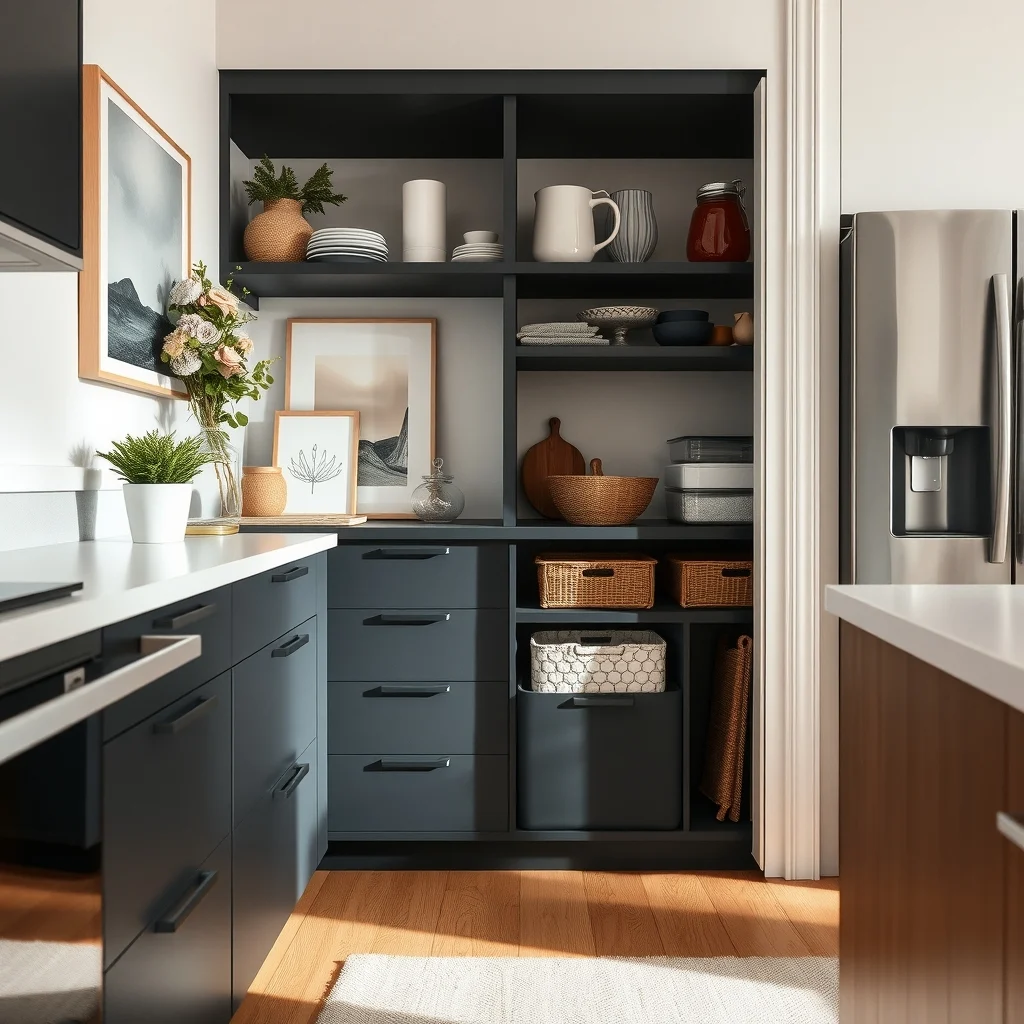
A deep pantry can feel like a black hole for small items, but installing a set of slim pull‑out drawers changes the experience entirely. The drawers glide on soft‑close rails, revealing neatly stacked packets of spices, snack bars, or baking supplies with a single pull. Finished in a warm oak veneer, the wood echoes the kitchen’s cabinets, while the drawer fronts feature simple brushed‑steel handles that blend with modern hardware elsewhere in the room. Because the drawers sit flush with the surrounding shelves, the pantry retains a streamlined silhouette. This system shines in households that love to keep a variety of specialty ingredients on hand; everything stays visible and reachable without digging. For renters or those on a tighter budget, a set of inexpensive wooden crates on rollers can mimic the drawer effect without permanent installation, though they may lack the smooth glide of a purpose‑built rail.
3. Tiered Riser for Canned Goods
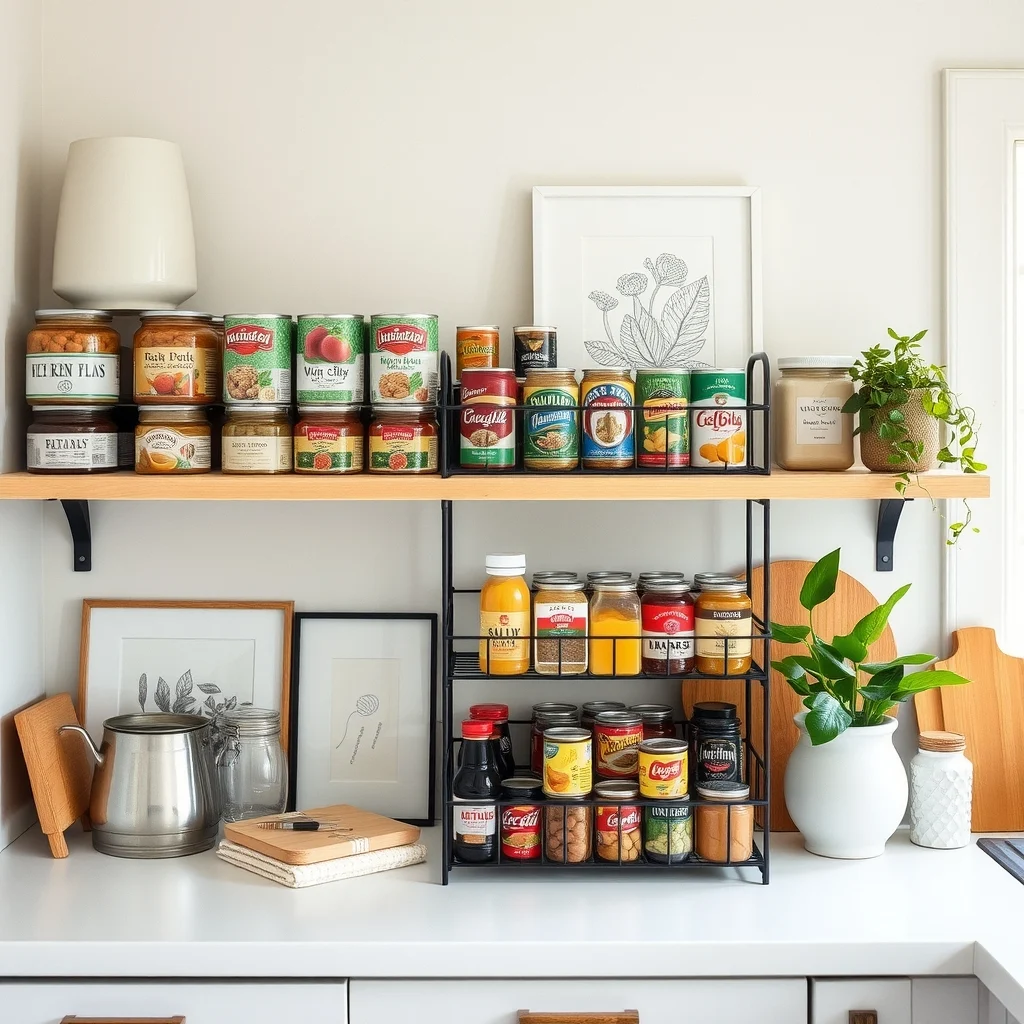
Stacked cans can quickly become a towering hazard, but a sturdy tiered riser made of powder‑coated steel transforms that vertical clutter into an organized display. The riser’s three levels separate items by size: small sauce jars on the bottom, medium‑sized beans in the middle, and larger soups on top. The dark finish contrasts nicely with the bright labels, making each product easy to locate. Placing the riser near the pantry’s entrance allows you to grab a can without bending, which is especially helpful in busy mornings. This solution works best in pantries with a single deep shelf that otherwise lacks division. If the pantry walls are painted a light hue, the riser’s black tone adds a subtle anchor point; however, on darker walls it may blend too much, so a brushed‑copper finish can provide a softer contrast. The only limitation is that the riser occupies floor space, so it should be measured against the pantry’s depth before purchase.
4. Hidden Baskets Behind Cabinet Doors
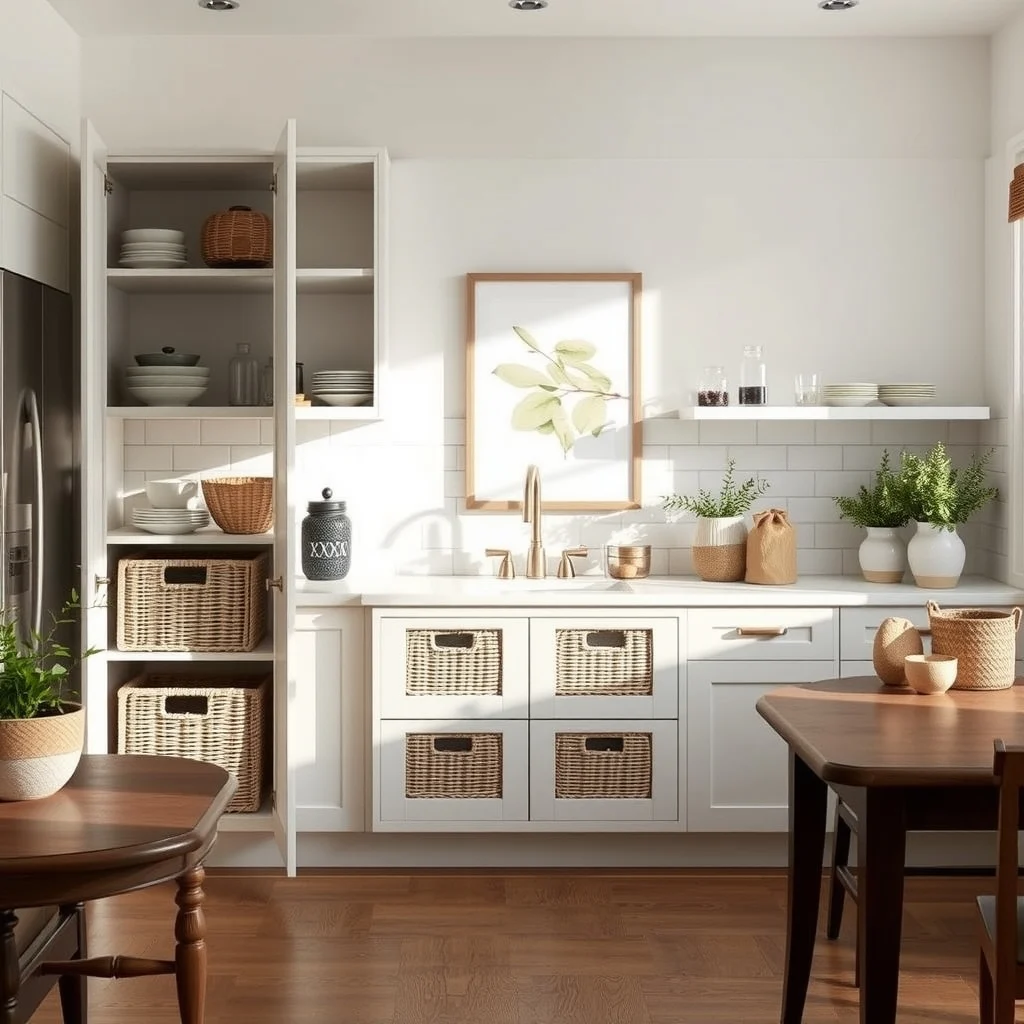
For those who prefer a closed‑look, attaching flat‑woven baskets to the interior of pantry doors creates concealed storage that slides out when needed. The baskets, crafted from natural rattan, hold loose items such as tea bags, snack packets, or reusable produce bags, keeping them out of sight while still accessible. When the door closes, the pantry maintains a tidy façade that matches the rest of the cabinetry. The natural texture of the rattan adds a subtle warmth that softens the otherwise sleek kitchen lines. This idea is particularly fitting for families with young children, as the baskets can be lifted out without exposing the pantry’s contents to little hands. If the pantry doors are painted a glossy finish, a thin layer of clear sealant on the basket’s back prevents any potential staining. The compromise here is that the baskets add a slight weight to the door, so sturdy hinges are recommended.
5. Magnetic Spice Rack on the Side Wall
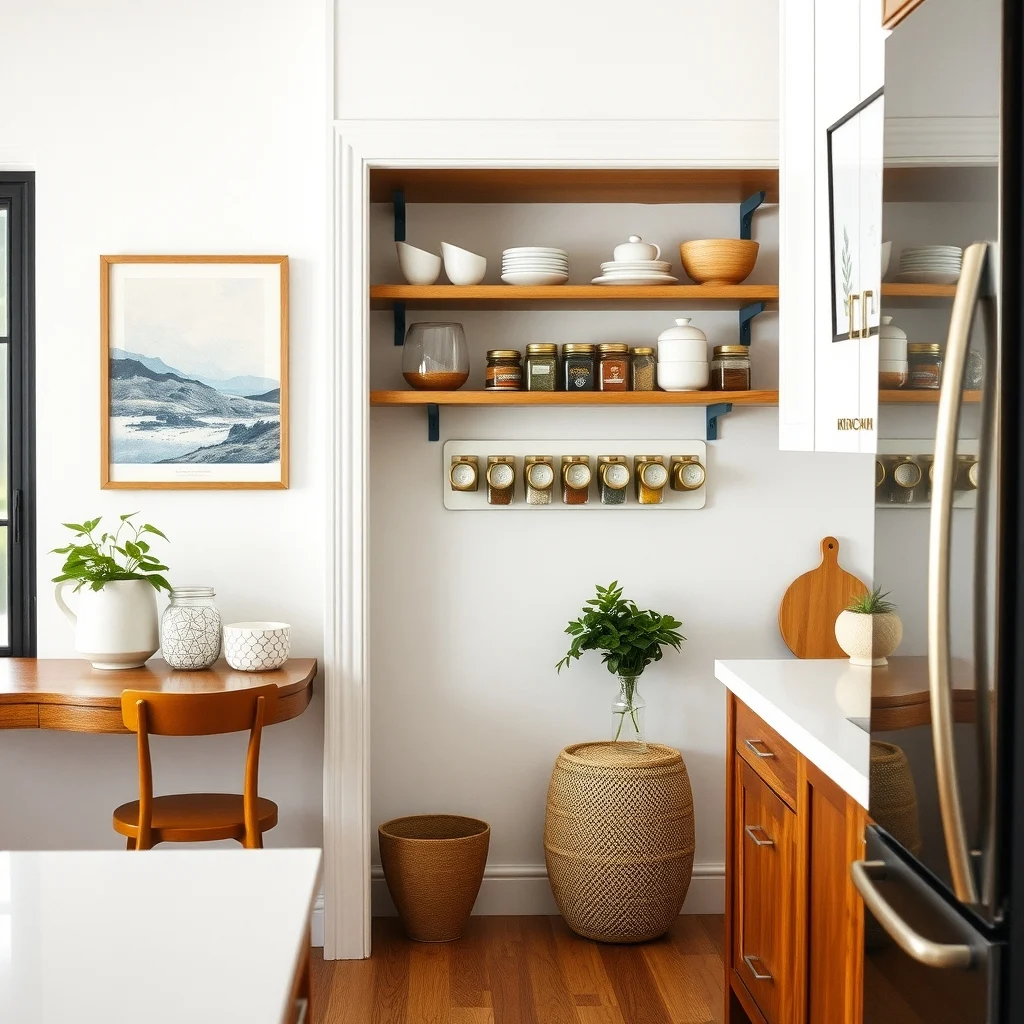
A thin strip of magnetic board affixed to the pantry’s side wall becomes a stylish stage for metal‑topped spice jars. The jars, each with a clear front and a brushed‑brass lid, snap onto the board in a single row, turning a collection of tiny containers into a decorative element. The magnetic surface is easy to clean and can be repositioned if you decide to rearrange the pantry layout later. This method shines in kitchens that enjoy a hint of industrial charm, as the metal accents echo other hardware like faucet handles or drawer pulls. When space is limited, the rack frees up shelf real estate for larger items. Should you prefer a softer aesthetic, a cork board with small hooks can replace the magnetic strip, though it will not hold as many jars. The only caution is to ensure the jars have a magnetic base; otherwise, a set of small metal plates can be glued to the bottom of each lid.
6. Rolling Cart as an Extension
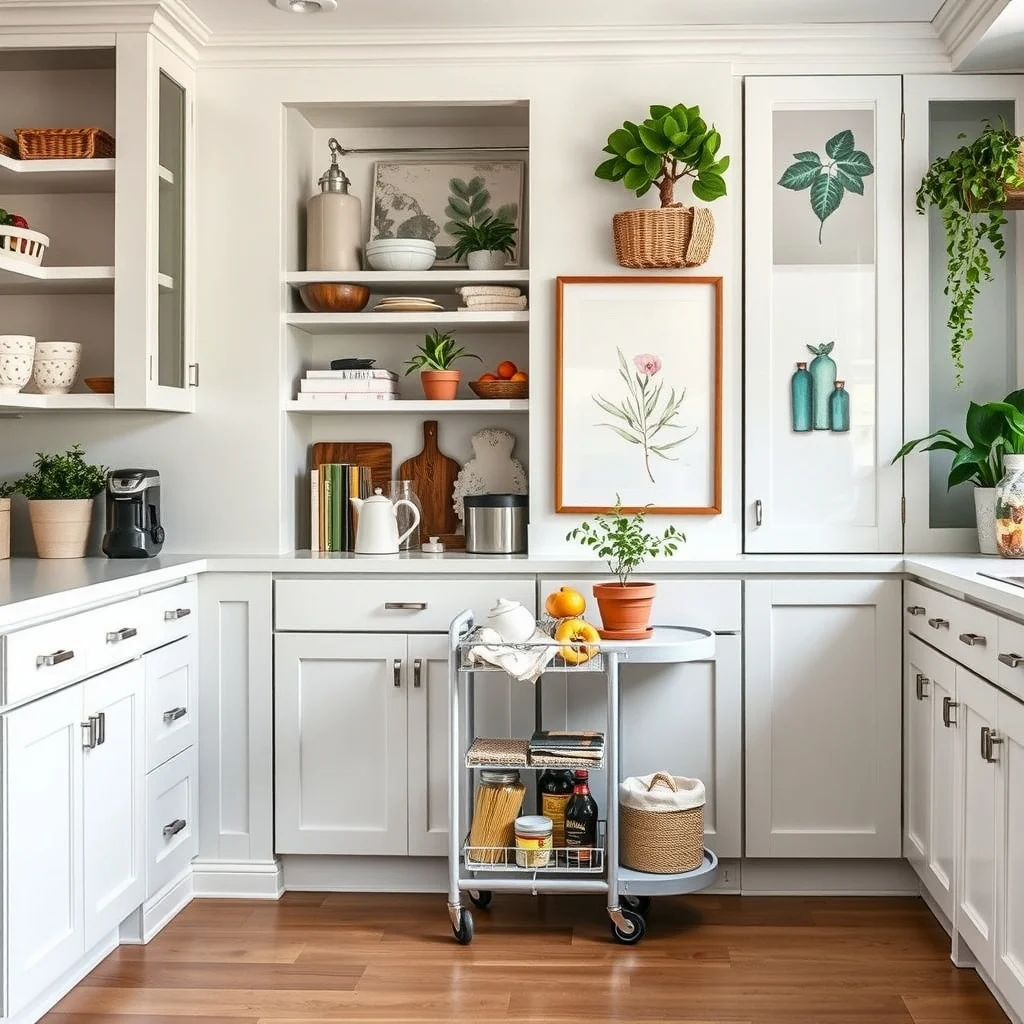
A compact rolling cart placed beside the pantry acts as an overflow station for items you use most often. With two or three tiers, the cart can hold everyday staples such as olive oil, pasta, or fresh produce, allowing you to pull the whole unit into the kitchen when you’re cooking. Finished in a muted sage green, the cart blends with natural wood cabinets while adding a pop of colour that livens the space. Wheels with soft rubber stops prevent scratches on hardwood floors, and the cart’s handle folds down when not in use, keeping the pantry’s footprint clean. This solution is ideal for households that like to keep the pantry door closed but still need quick access to frequently used ingredients. If a cart feels too large for a narrow hallway, a single‑shelf kitchen trolley can serve the same purpose with a slimmer profile, though it will hold fewer items.
7. Integrated Lighting and Labeling System

Combining soft LED lighting with a cohesive labeling approach turns the pantry into a gallery of organization. Small, battery‑operated puck lights installed under each shelf cast a gentle wash that highlights the contents without creating glare. Labels, printed on kraft paper with simple black typography, are attached to the front of each container or basket, creating a uniform look that feels intentional. The warm glow not only makes it easier to see what’s inside each bin, but it also adds a sense of calm each time you open the pantry door. This method works well in both open‑concept kitchens and more traditional layouts, as the lighting can be adjusted to match the overall ambience. For renters, adhesive LED strips that peel off without residue provide a non‑permanent option. The downside is the need to replace batteries periodically, so choosing a rechargeable model can reduce long‑term maintenance.
Frequently Asked Questions

How can I keep my pantry organized if I have limited shelf space?
Use vertical solutions such as tiered risers or pull‑out drawers to make the most of the height you have. Adding a rolling cart beside the pantry also creates extra storage without sacrificing existing space.
What is the best material for pantry containers?
Clear glass or sturdy acrylic gives visibility, while matte‑finished ceramics add a softer look. Choose a material that matches the kitchen’s overall style and can withstand frequent handling.
Can I install LED lighting myself?
Yes, battery‑operated puck lights are simple to attach with adhesive backs. For wired options, it’s safest to follow the manufacturer’s instructions or hire a qualified electrician.
Is it okay to use magnetic spice racks on painted walls?
A magnetic board adheres well to most painted surfaces, but testing a small area first ensures the paint won’t peel. If you’re concerned, a cork board with hooks offers a similar look without magnets.
How often should I declutter my pantry?
A quick scan every three months helps you catch expired items and rearrange products that have shifted. A deeper clean once a year keeps the space truly functional.
Final Thoughts

Creating a pantry that feels both beautiful and functional is less about buying the most expensive accessories and more about understanding how you move through the space. Whether you choose open shelving, hidden baskets, or a rolling cart, each idea offers a way to see and reach what you need without the stress of clutter. Take a moment to observe the flow of your kitchen, note the items you reach for most often, and let that guide the organization method you adopt. A tidy pantry not only streamlines meal preparation but also adds a quiet sense of order to the heart of the home.