

Many homeowners love the way wood brings a sense of calm to a kitchen, yet they often wonder how to keep the space feeling fresh rather than dated. The good news is that a warm‑toned wood palette can be paired with modern fixtures, clever storage, and subtle texture to create a kitchen that feels both inviting and current. Below are seven distinct approaches that show how you can let natural wood lead the design while still addressing practical needs like durability and workflow.
1. Reclaimed Barn‑Wood Cabinets with Simple Brass Pulls
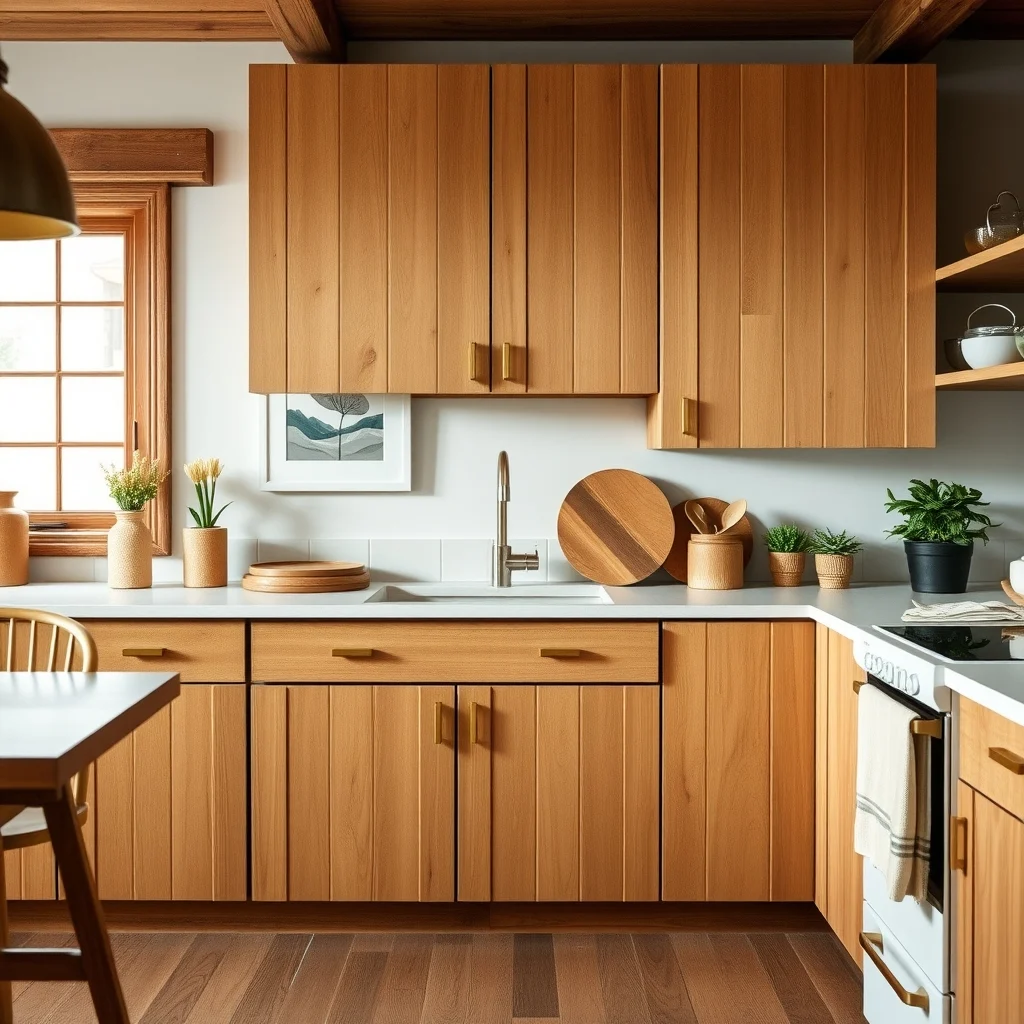
Imagine opening a set of cabinets whose grain tells a story of weathered barns and open fields. Using reclaimed barn wood for the cabinet faces adds depth without the need for heavy ornamentation. Pair the raw timber with brushed‑brass pull handles; the metal catches the light and adds a quiet contrast that keeps the look from feeling rustic in a dated way. The natural patina of the wood works well in kitchens that receive plenty of daylight, allowing the shadows to highlight the uneven textures. If the reclaimed material feels too rugged for your taste, a light sanding followed by a matte oil finish can soften the surface while preserving the character. This approach suits open‑plan homes where the kitchen is a visual anchor for the rest of the living area.
2. Floating Timber Countertop Over a Stone Backsplash

A floating countertop made from a single slab of walnut or maple creates a sleek silhouette that appears to hover above the floor. The minimal under‑support keeps the visual weight low, especially when the backsplash behind it is a slab of honed limestone or slate. The stone’s cool undertones balance the warmth of the wood, and the slight gap between the two surfaces makes cleaning easier. Installing pendant lighting that hangs just above the work zone adds focused illumination without cluttering the ceiling. For smaller kitchens where a full‑length slab might be costly, consider a shorter floating island paired with a matching countertop extension on the main work surface. This design works best in contemporary homes that favor clean lines and natural material contrasts.
3. Mixed‑Tone Wood Island with Open Pine Shelving

Combining different wood species can create visual interest while still feeling cohesive. A central island finished in rich walnut provides a sturdy base for food preparation, while the surrounding open shelving made from light pine offers a place to display ceramic bowls or a basket of fresh herbs. The contrast between the dark island and the airy shelves prevents the space from feeling heavy, and the open design encourages airflow, reducing the chance of moisture buildup on wooden surfaces. If you’re concerned about the durability of pine in a high‑traffic area, a clear polyurethane coat will protect the shelves without altering their bright hue. This arrangement is ideal for families who need accessible storage and like to keep everyday items within arm’s reach.
4. Full‑Height Timber Paneling on One Wall

Covering a single wall with vertical timber panels can transform a kitchen into a gallery of natural texture. Choose boards with a straight grain and a warm honey finish; the vertical orientation draws the eye upward, adding a subtle sense of height. To keep the room from feeling enclosed, leave the opposite walls in a light, neutral paint and install recessed lighting that washes the panels with soft illumination. A narrow strip of glass shelving can be inserted into the paneling to hold spices or small plants, adding function without breaking the seamless look. If the kitchen is prone to humidity, select a wood species such as cedar that naturally resists moisture, or apply a vapor‑barrier primer before finishing. This idea works well in compact kitchens where a single accent wall can become the focal point.
5. Wide‑Plank Oak Flooring Paired with a Hand‑Woven Jute Rug

Flooring sets the foundation for any kitchen’s atmosphere, and wide‑plank oak provides a sturdy yet gentle base that ages gracefully. The natural amber tones complement most cabinet finishes, and the broader boards reduce the visual clutter of grout lines. Adding a hand‑woven jute rug in front of the sink defines the work zone while introducing a tactile contrast that feels soft underfoot. The rug’s neutral beige hue balances the richer wood, and its low pile makes it easy to sweep or vacuum. For households with pets or children, choose a rug with a natural stain‑resistant treatment to prolong its life. This combination is especially suited to kitchens that prioritize comfort and a lived‑in feel.
6. Warm‑Tone Wood Accents in Lighting and Hardware

Small touches of wood can echo the larger material palette without overwhelming the design. Consider pendant lights that feature a thin wooden shade surrounding a clear glass globe; the shade diffuses light gently while reinforcing the warm tone of the cabinets. Similarly, replace standard drawer pulls with those made from brushed teak or walnut, which add a subtle richness to every opening. When selecting these accents, look for finishes that are sealed against kitchen humidity to avoid warping. If budget is a concern, a simple DIY project of sanding and oiling plain metal pulls can achieve a comparable effect. These details work in any kitchen style, from minimalist to farmhouse, because they provide cohesion without demanding a major overhaul.
7. Butcher‑Block Sink Integrated into a Timber Counter
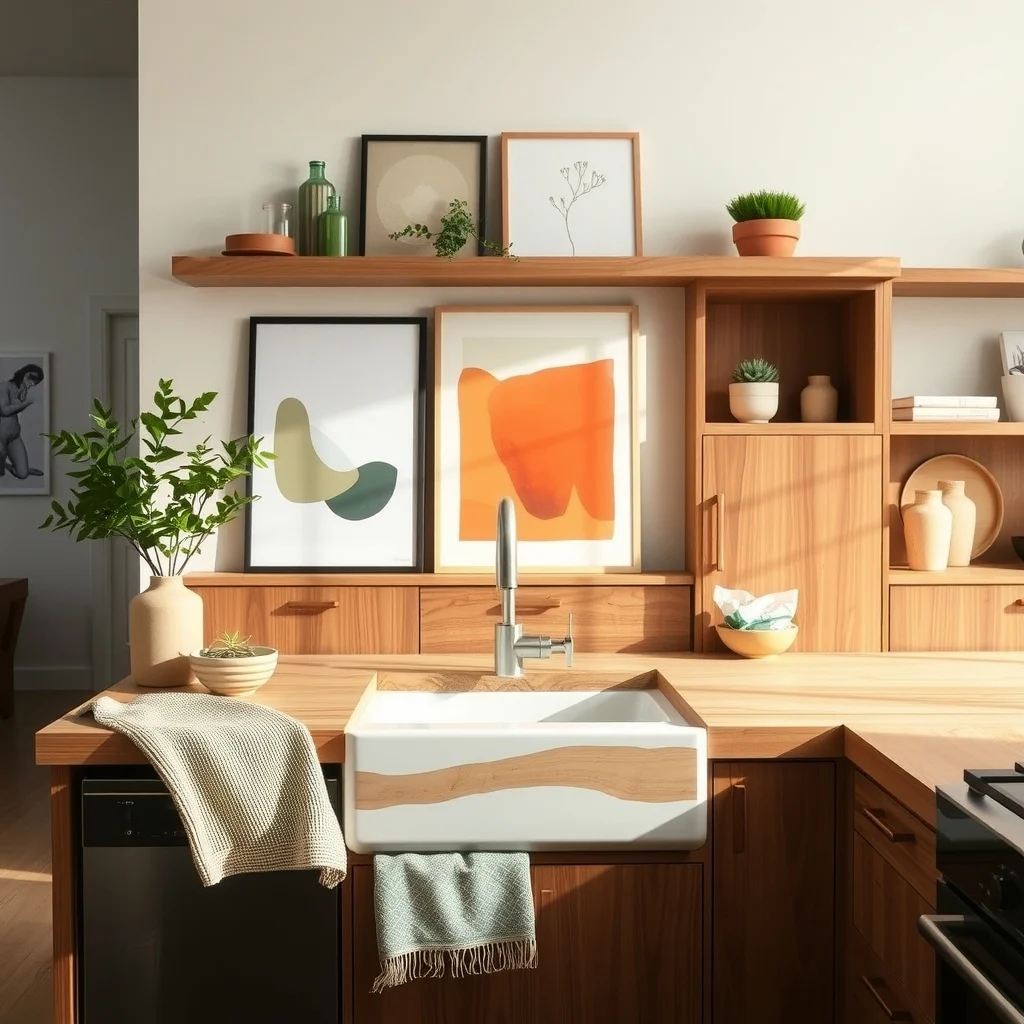
Integrating a butcher‑block sink directly into a wooden countertop creates a seamless work surface that feels natural and functional. A thick slab of maple, treated with food‑safe oil, can be routed to accommodate the sink basin, allowing water to flow directly into a concealed drain. The surrounding wood remains uninterrupted, which makes wiping down the area quick and easy. To protect the sink from scratches, a stainless‑steel grid can be placed inside, offering a durable surface for cutting boards. If the kitchen receives a lot of direct sunlight, a slightly darker wood such as cherry will be less prone to fading. This solution is perfect for chefs who appreciate the tactile quality of wood while needing a reliable sink for daily cooking.
FAQ

How do I keep wood cabinets from looking worn over time?
Use a high‑quality oil or wax finish that penetrates the grain and replenishes moisture. Regularly dust with a soft cloth and avoid harsh chemical cleaners; a mild soap solution followed by a quick dry will preserve the surface.
Can I install a wooden countertop in a kitchen that gets a lot of heat?
Yes, but choose a dense hardwood such as maple or oak and finish it with a heat‑resistant sealant. Adding a heat‑deflecting pad under hot pots will extend the countertop’s life.
Is it safe to have a wooden floor near a kitchen sink?
A properly sealed wood floor can handle occasional splashes. Apply a waterproof sealant in the kitchen area and use area rugs that can be washed to protect against prolonged moisture exposure.
What lighting works best with warm wood tones?
Warm white LEDs (around 2700‑3000 K) enhance the natural glow of wood without creating harsh shadows. Layered lighting—overhead recessed fixtures combined with pendant or under‑cabinet lights—offers flexibility for cooking and ambiance.
Do mixed‑tone wood designs clash in small kitchens?
When the tones are chosen from the same color family—such as walnut and pine with similar undertones—the contrast adds depth without feeling chaotic. Keep the rest of the palette neutral to let the wood remain the focal point.
Final Thoughts

Warm wood can serve as the backbone of a kitchen that feels both grounded and contemporary. By selecting the right species, finishes, and complementary elements, you can craft a space that welcomes daily activity while aging gracefully. Whether you opt for reclaimed cabinets, a floating countertop, or subtle wooden accents in lighting, each approach offers a way to celebrate natural materials without sacrificing practicality. Take the ideas that resonate most with your home’s layout and lifestyle, and let the warmth of wood become the quiet, enduring star of your kitchen.