
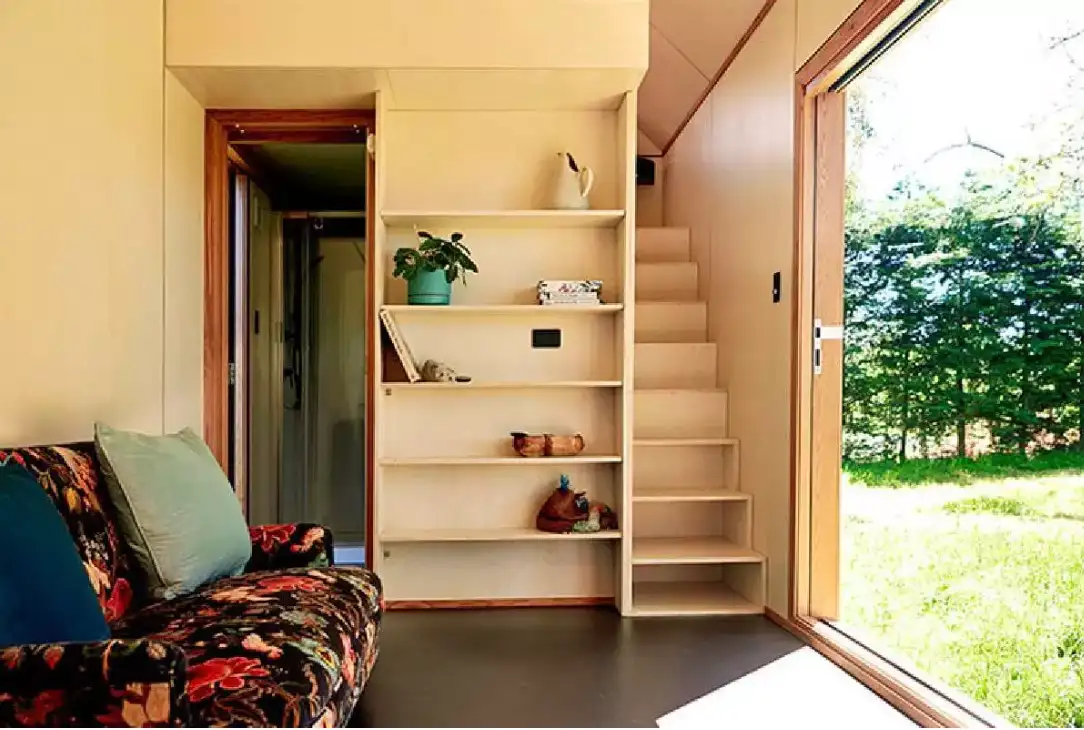
The home’s signature triangular roofline isn’t just an aesthetic choice — it’s a practical response to the site’s climate. In forested, high-humidity regions with frequent rainfall, effective drainage is essential, and the steep angles help shed water quickly and prevent pooling or leaks.
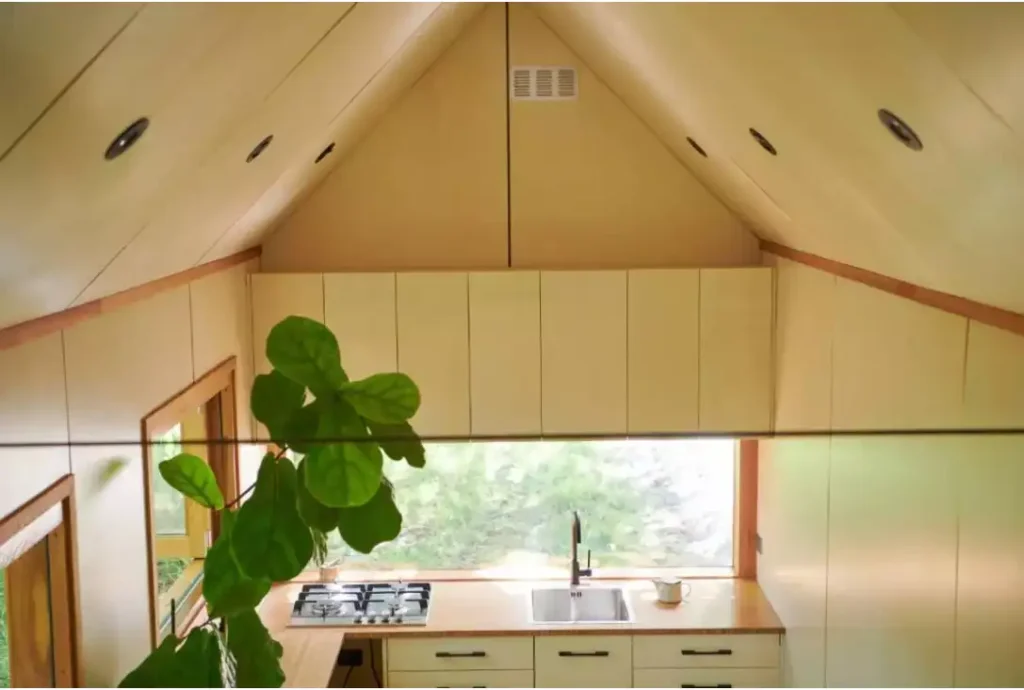
A ventilation fan and spotlights are built into the roof structure to keep the interior comfortable year-round, while extra storage has been cleverly added above the kitchen — using vertical space that would otherwise go to waste in a smaller home.
6. The Bathroom: Off-Grid Ready
For anyone researching off-grid living, this section is particularly relevant. The home uses a composting toilet rather than a conventional flushing system, which means no black water plumbing is required — a major simplification for off-grid or rural installations.
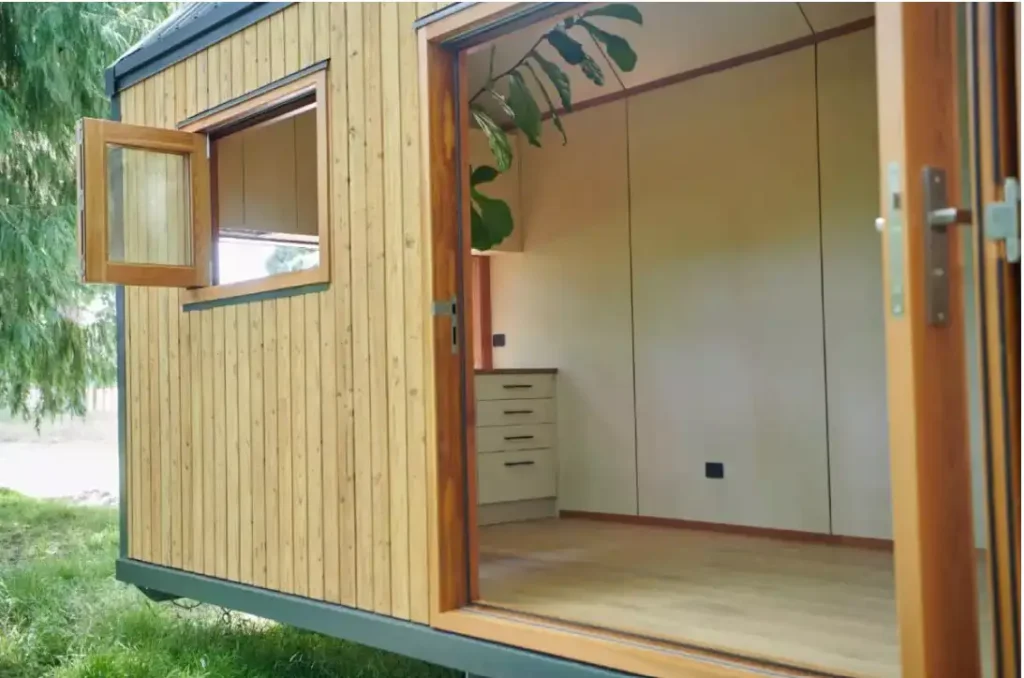
Water needs to be supplied on-site, and electricity runs via a standard caravan plug, making the home easy to connect on properties that already have basic services. For those wanting to go a step further, solar power is also offered as an option, allowing for a genuinely self-sufficient setup.
7. The Bedroom: A Peaceful Retreat